Michael Spencer a.k.a Internet Monk, has this to say about the sermon
The Gospel leads us to practical discipleship, but it doesn’t create a religion of simplistic success principles. Good preaching leads to practical application without obscuring the Gospel itself.
To gain some idea of the state of contemporary preaching, survey what is being preached at any ten successful megachurches in your state, or any ten churches who very much want to become megachurches in the future. Compare these sermons to the sermons of any group of “great preachers” of the past, or well-known expositional, exegetical preachers today.
read more
Sunday, October 22, 2006


What's Wrong with the Sermon?
Michael Spencer a.k.a Internet Monk, has this to say about the sermon
The Gospel leads us to practical discipleship, but it doesn’t create a religion of simplistic success principles. Good preaching leads to practical application without obscuring the Gospel itself.
To gain some idea of the state of contemporary preaching, survey what is being preached at any ten successful megachurches in your state, or any ten churches who very much want to become megachurches in the future. Compare these sermons to the sermons of any group of “great preachers” of the past, or well-known expositional, exegetical preachers today.
read more
The Gospel leads us to practical discipleship, but it doesn’t create a religion of simplistic success principles. Good preaching leads to practical application without obscuring the Gospel itself.
To gain some idea of the state of contemporary preaching, survey what is being preached at any ten successful megachurches in your state, or any ten churches who very much want to become megachurches in the future. Compare these sermons to the sermons of any group of “great preachers” of the past, or well-known expositional, exegetical preachers today.
read more
Saturday, October 21, 2006
The Ladder of Graces
 The Ladder of Graces
by Theopkanis the Monk from Philokalia
The first step is that of purist prayer.
From this there comes a warmth of heart,
And then a strange, a holy energy
Then tears wrung from the heart, God-given,
Then peace from thoughts of every kind,
From this arises purging of the intellect,
And next the vision of heavenly mysteries.
Unheard-of light is born from this ineffably,
And, thence, beyond all telling, the heart’s illumination.
Last comes- a step that has no limit,
Though compassed in a single line-
Perfection that is endless.
The ladder’s lowest step
Prescribes pure prayer alone.
But prayer has many forms:
My discourse would be long
Were I now to speak of them:
And, friend, know that always
Experience teaches one, not words.
A ladder rising wonderously to heaven’s vault,
Ten steps that strangely vivify the soul
Ten steps that herald the soul’s life,
A saint inspired by God has said:
Do not deceive yourself with idle hopes
That in the world to come you will find life.
If you have not tried to find it in this present world.
Ten steps: a wisdom born of God,
Ten steps: fruit of all the books,
Ten steps that point toward perfection,
Ten steps that lead one up to heaven
Ten steps through which a man knows God.
The ladder may seems short indeed,
But if your heart can inwardly experience it,
You will find a wealth the world cannot contain,
A god-like fountain flowing with unheard-of life.
This tear-graced ladder is the best of masters,
Clearly teaching each to know its stages
If when you behold it
You think you stand securely on it,
Ask yourself which step you stand,
So that we, the indolent, may also profit.
My friend, if you want to learn from all this,
Detach yourself from everything,
From what is senseless, from what seems intelligent
Without detachment, nothing can be learnt.
Experience alone can teach these things, not talk.
The Ladder of Graces
The Ladder of Gracesby Theopkanis the Monk from Philokalia
The first step is that of purist prayer.
From this there comes a warmth of heart,
And then a strange, a holy energy
Then tears wrung from the heart, God-given,
Then peace from thoughts of every kind,
From this arises purging of the intellect,
And next the vision of heavenly mysteries.
Unheard-of light is born from this ineffably,
And, thence, beyond all telling, the heart’s illumination.
Last comes- a step that has no limit,
Though compassed in a single line-
Perfection that is endless.
The ladder’s lowest step
Prescribes pure prayer alone.
But prayer has many forms:
My discourse would be long
Were I now to speak of them:
And, friend, know that always
Experience teaches one, not words.
A ladder rising wonderously to heaven’s vault,
Ten steps that strangely vivify the soul
Ten steps that herald the soul’s life,
A saint inspired by God has said:
Do not deceive yourself with idle hopes
That in the world to come you will find life.
If you have not tried to find it in this present world.
Ten steps: a wisdom born of God,
Ten steps: fruit of all the books,
Ten steps that point toward perfection,
Ten steps that lead one up to heaven
Ten steps through which a man knows God.
The ladder may seems short indeed,
But if your heart can inwardly experience it,
You will find a wealth the world cannot contain,
A god-like fountain flowing with unheard-of life.
This tear-graced ladder is the best of masters,
Clearly teaching each to know its stages
If when you behold it
You think you stand securely on it,
Ask yourself which step you stand,
So that we, the indolent, may also profit.
My friend, if you want to learn from all this,
Detach yourself from everything,
From what is senseless, from what seems intelligent
Without detachment, nothing can be learnt.
Experience alone can teach these things, not talk.
Friday, October 20, 2006
The Eagle in the Sand
Book Review
Simon Scarrow, The Eagle in the Sand (Headline 2006)
This is the seventh book written by Simon Scarrow in the Eagles series. The other books are Under the Eagle, The Eagle’s Conquest, When the Eagle Hunts, The Eagle and the Wolves, The Eagle’s Prey and The Eagle’s Prophecy. Each book details a campaign of Rome in the first century as she seeks to conquer and bring to heel, much of the known world at that time. The two main characters are Macro, a veteran legionnaire and Cato, an aristocrat who was exiled to become a legionaire. The various campaigns were in Europe and Britain. The Eagle in the Sand was the first one set outside Europe in Judaea, in the present day Middle East.
The author, Simon Scarrow is a lecturer at the City College in Norwich. In his free time, he used to organize Roman History programs for students in taking them to the ruins and museums. It was his extensive knowledge of the Roman army life and of the various campaigns that makes reading his novels so interesting.
The Roman army was the most disciplined and well trained fighting force of that era making Rome the sole superpower. The infantry or legionaries were the backbone of the army. With their heavy body armour and the strategic teamwork in forming a modified phalanx with their shields and gladius (short sword), it was a formidable killing machine. Scarrow researched his various novels well; making the campaigns seems like CNN reports. His writing is similar to Conn Iggulden’s Emperor series which narrated the life of Julius Caesar; The Gates of Rome, The Death of Kings and The God of War.
In this novel, Macro and Cato, both centurions now, were sent to Judaea to spy out whether the governor of Syria was planning a military coup. How they became unwilling agents of Rome’s secret service was told in the previous novels. In Judaea they became involved in the great revolt of the Jewish people in AD 66. With a small contingent of soldiers, they were able to defeat the revolt of the peasants and their ally, the Parthians, who also had design on this part of the world.
Scarrow did not give too much details of Roman army life in this novel but instead spend more time describing the land of Judaea and Nabataea especially its capital Petra. Petra is in modern day Jordan. This is still an interesting read but the story telling is often distracted by information about the Jewish people. Somehow it lacks the continuity of the other novels. This series is comparable to the Sharpe series by Bernard Cornwell (Napoleonic wars in Spain, Portugal and France).
Simon Scarrow, The Eagle in the Sand (Headline 2006)
This is the seventh book written by Simon Scarrow in the Eagles series. The other books are Under the Eagle, The Eagle’s Conquest, When the Eagle Hunts, The Eagle and the Wolves, The Eagle’s Prey and The Eagle’s Prophecy. Each book details a campaign of Rome in the first century as she seeks to conquer and bring to heel, much of the known world at that time. The two main characters are Macro, a veteran legionnaire and Cato, an aristocrat who was exiled to become a legionaire. The various campaigns were in Europe and Britain. The Eagle in the Sand was the first one set outside Europe in Judaea, in the present day Middle East.
The author, Simon Scarrow is a lecturer at the City College in Norwich. In his free time, he used to organize Roman History programs for students in taking them to the ruins and museums. It was his extensive knowledge of the Roman army life and of the various campaigns that makes reading his novels so interesting.
The Roman army was the most disciplined and well trained fighting force of that era making Rome the sole superpower. The infantry or legionaries were the backbone of the army. With their heavy body armour and the strategic teamwork in forming a modified phalanx with their shields and gladius (short sword), it was a formidable killing machine. Scarrow researched his various novels well; making the campaigns seems like CNN reports. His writing is similar to Conn Iggulden’s Emperor series which narrated the life of Julius Caesar; The Gates of Rome, The Death of Kings and The God of War.
In this novel, Macro and Cato, both centurions now, were sent to Judaea to spy out whether the governor of Syria was planning a military coup. How they became unwilling agents of Rome’s secret service was told in the previous novels. In Judaea they became involved in the great revolt of the Jewish people in AD 66. With a small contingent of soldiers, they were able to defeat the revolt of the peasants and their ally, the Parthians, who also had design on this part of the world.
Scarrow did not give too much details of Roman army life in this novel but instead spend more time describing the land of Judaea and Nabataea especially its capital Petra. Petra is in modern day Jordan. This is still an interesting read but the story telling is often distracted by information about the Jewish people. Somehow it lacks the continuity of the other novels. This series is comparable to the Sharpe series by Bernard Cornwell (Napoleonic wars in Spain, Portugal and France).
The Eagle in the Sand
Book Review
Simon Scarrow, The Eagle in the Sand (Headline 2006)
This is the seventh book written by Simon Scarrow in the Eagles series. The other books are Under the Eagle, The Eagle’s Conquest, When the Eagle Hunts, The Eagle and the Wolves, The Eagle’s Prey and The Eagle’s Prophecy. Each book details a campaign of Rome in the first century as she seeks to conquer and bring to heel, much of the known world at that time. The two main characters are Macro, a veteran legionnaire and Cato, an aristocrat who was exiled to become a legionaire. The various campaigns were in Europe and Britain. The Eagle in the Sand was the first one set outside Europe in Judaea, in the present day Middle East.
The author, Simon Scarrow is a lecturer at the City College in Norwich. In his free time, he used to organize Roman History programs for students in taking them to the ruins and museums. It was his extensive knowledge of the Roman army life and of the various campaigns that makes reading his novels so interesting.
The Roman army was the most disciplined and well trained fighting force of that era making Rome the sole superpower. The infantry or legionaries were the backbone of the army. With their heavy body armour and the strategic teamwork in forming a modified phalanx with their shields and gladius (short sword), it was a formidable killing machine. Scarrow researched his various novels well; making the campaigns seems like CNN reports. His writing is similar to Conn Iggulden’s Emperor series which narrated the life of Julius Caesar; The Gates of Rome, The Death of Kings and The God of War.
In this novel, Macro and Cato, both centurions now, were sent to Judaea to spy out whether the governor of Syria was planning a military coup. How they became unwilling agents of Rome’s secret service was told in the previous novels. In Judaea they became involved in the great revolt of the Jewish people in AD 66. With a small contingent of soldiers, they were able to defeat the revolt of the peasants and their ally, the Parthians, who also had design on this part of the world.
Scarrow did not give too much details of Roman army life in this novel but instead spend more time describing the land of Judaea and Nabataea especially its capital Petra. Petra is in modern day Jordan. This is still an interesting read but the story telling is often distracted by information about the Jewish people. Somehow it lacks the continuity of the other novels. This series is comparable to the Sharpe series by Bernard Cornwell (Napoleonic wars in Spain, Portugal and France).
Simon Scarrow, The Eagle in the Sand (Headline 2006)
This is the seventh book written by Simon Scarrow in the Eagles series. The other books are Under the Eagle, The Eagle’s Conquest, When the Eagle Hunts, The Eagle and the Wolves, The Eagle’s Prey and The Eagle’s Prophecy. Each book details a campaign of Rome in the first century as she seeks to conquer and bring to heel, much of the known world at that time. The two main characters are Macro, a veteran legionnaire and Cato, an aristocrat who was exiled to become a legionaire. The various campaigns were in Europe and Britain. The Eagle in the Sand was the first one set outside Europe in Judaea, in the present day Middle East.
The author, Simon Scarrow is a lecturer at the City College in Norwich. In his free time, he used to organize Roman History programs for students in taking them to the ruins and museums. It was his extensive knowledge of the Roman army life and of the various campaigns that makes reading his novels so interesting.
The Roman army was the most disciplined and well trained fighting force of that era making Rome the sole superpower. The infantry or legionaries were the backbone of the army. With their heavy body armour and the strategic teamwork in forming a modified phalanx with their shields and gladius (short sword), it was a formidable killing machine. Scarrow researched his various novels well; making the campaigns seems like CNN reports. His writing is similar to Conn Iggulden’s Emperor series which narrated the life of Julius Caesar; The Gates of Rome, The Death of Kings and The God of War.
In this novel, Macro and Cato, both centurions now, were sent to Judaea to spy out whether the governor of Syria was planning a military coup. How they became unwilling agents of Rome’s secret service was told in the previous novels. In Judaea they became involved in the great revolt of the Jewish people in AD 66. With a small contingent of soldiers, they were able to defeat the revolt of the peasants and their ally, the Parthians, who also had design on this part of the world.
Scarrow did not give too much details of Roman army life in this novel but instead spend more time describing the land of Judaea and Nabataea especially its capital Petra. Petra is in modern day Jordan. This is still an interesting read but the story telling is often distracted by information about the Jewish people. Somehow it lacks the continuity of the other novels. This series is comparable to the Sharpe series by Bernard Cornwell (Napoleonic wars in Spain, Portugal and France).
Thursday, October 19, 2006
Worry

One of my earlier attempts.
Ahh... the wonders of technology. After spending months of trying to get Adobe Photoshop, I now have no inspiration to make anymore wallpapers. Hmmmm...
Worry
One of my earlier attempts.
Ahh... the wonders of technology. After spending months of trying to get Adobe Photoshop, I now have no inspiration to make anymore wallpapers. Hmmmm...
Renovation of Our Souls
Recently we have to do some massive renovation to my father’s garden. My father’s house is built on hill slope. After about 10 years, we discovered that the soil in his garden was beginning to shift down the slope. The contractor took a look and shook his head. There was however a gleam in his eyes which may mean that he is thinking; now he can afford to buy a brand new Mercedes! He told us that the soil shifting is due to an inadequate barrier below the house.
What he suggested was that we dig a deep trench around the outer perimeter of the garden. Then he was going sink about a few hundred tree trunks (about 8 feet long each) vertically into the trench. Next he would tie these wooden stakes together with iron bars. Finally he will pour concrete into the trench to fix the whole structure. That should hold the garden in place, he declared. I am sure it will hold the garden in place. It sounds like I am building a fortress.
We would not have been aware that the soil in the garden has shifted if not for a one inch gap appearing at the base of the perimeter wall of the garden. It may be the same for our spiritual life. We come to church regularly to worship and think everything is going well. We think the hymn “It is well with my soul” is describing our spiritual lives.
Some of us may have been Christians for so many years that we have become too comfortable in church. We may not be aware of an inner shift in the soil of our inner spiritual life away from God. Maybe we have been praying less and do not attend prayer meetings anymore. We find less and less time to read the Bible. Where once there was an urgency to share about Jesus with our non-Christian friends, there is none now. We find ourselves putting less and less into the offering bags.
It may even have been years since we regularly examine our lives to see whether we are living a life glorifying to God. We share less and less with each other about what God is doing in our lives. Our emotions are more often full of anger than of gratitude. Anger is a sign that we are not content with what we have. If that is so, we may need to do some renovation in the garden of our souls.
Francis A. Schaeffer writing in True Spirituality (Wheaton, IL: Tyndale House Publishers, 1983) offers some insights,
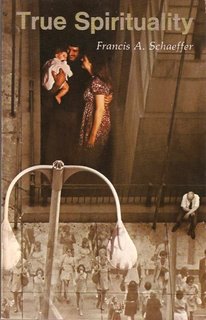
“The true Christian life, true spirituality, does not mean just that we have been born again. It must begin there, but it means more than that. It does not mean only that we are going to be in heaven. It does mean that, but it means much more than that. The true Christian life, true spirituality in the present life, means more than being justified and knowing that I am going to heaven.
It is not just a desire to get rid of taboos in order to live an easier and looser life. Our desire must be for a deeper life. And when I begin to think of this, the Bible presents to me, the whole of the Ten Commandments and the whole of the Law of Love.
True spirituality, the true Christian life, is not just outward, but it is inward- it is not to covet against God and men.
But it is even more than this: it is positive; positive inward reality, and then positive in outward results. The inward thing is to be positive and not just negative; and then sweeping out of the inward positive reality, there is to be a positive manifestation externally. It is not just that we are dead to certain things, but we are to love God, we are to be alive to him, in this present moment of history. And we are to love men, to be alive to men as men, and to be in communication on a true personal level with men, in this present moment of history” (p.16, 17)
Renovation of garden of our soul starts inwards. We need to shore up the foundations of our lives with the Word of God, the love of God and the empowerment of the Holy Spirit. Our spiritual lives must be in continual movement; vertically in a relationship with God and horizontally in relationships with other people. It must be happening now and always. As Schaeffer said, “in this present moment of history”.
This continuing process of interacting with God and with men as we deepen our inner spiritual life is known as spiritual formation. Dallas Willard explained it better in his book, Renovation of the Heart (Colorado Springs: NavPress 2002)
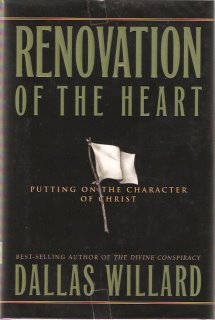
“Spiritual formation for the Christian basically refers to the Spirit-driven process of forming the inner world of the human self in such a way that it becomes the inner being of Christ himself…The result is that the ‘outer’ life of the individual increasingly becomes a natural expression of the inner reality of Jesus and his teachings. Doing what he said and did increasingly becomes part of who we are” (p.22, 159)
If our spiritual life is continually being involved in the process of spiritual formation, then we need not fear that we will slip and fall. Our inner life becomes the life of Christ himself! There is no more solid foundation than Jesus Christ. It is worrying to hear that only 3 out of 10 Christians finished well. It is a good reminder for us not to be complacent but to be continually intentionally involved in the spiritual formation of our souls.
Soli Deo Gloria
What he suggested was that we dig a deep trench around the outer perimeter of the garden. Then he was going sink about a few hundred tree trunks (about 8 feet long each) vertically into the trench. Next he would tie these wooden stakes together with iron bars. Finally he will pour concrete into the trench to fix the whole structure. That should hold the garden in place, he declared. I am sure it will hold the garden in place. It sounds like I am building a fortress.
We would not have been aware that the soil in the garden has shifted if not for a one inch gap appearing at the base of the perimeter wall of the garden. It may be the same for our spiritual life. We come to church regularly to worship and think everything is going well. We think the hymn “It is well with my soul” is describing our spiritual lives.
Some of us may have been Christians for so many years that we have become too comfortable in church. We may not be aware of an inner shift in the soil of our inner spiritual life away from God. Maybe we have been praying less and do not attend prayer meetings anymore. We find less and less time to read the Bible. Where once there was an urgency to share about Jesus with our non-Christian friends, there is none now. We find ourselves putting less and less into the offering bags.
It may even have been years since we regularly examine our lives to see whether we are living a life glorifying to God. We share less and less with each other about what God is doing in our lives. Our emotions are more often full of anger than of gratitude. Anger is a sign that we are not content with what we have. If that is so, we may need to do some renovation in the garden of our souls.
Francis A. Schaeffer writing in True Spirituality (Wheaton, IL: Tyndale House Publishers, 1983) offers some insights,

“The true Christian life, true spirituality, does not mean just that we have been born again. It must begin there, but it means more than that. It does not mean only that we are going to be in heaven. It does mean that, but it means much more than that. The true Christian life, true spirituality in the present life, means more than being justified and knowing that I am going to heaven.
It is not just a desire to get rid of taboos in order to live an easier and looser life. Our desire must be for a deeper life. And when I begin to think of this, the Bible presents to me, the whole of the Ten Commandments and the whole of the Law of Love.
True spirituality, the true Christian life, is not just outward, but it is inward- it is not to covet against God and men.
But it is even more than this: it is positive; positive inward reality, and then positive in outward results. The inward thing is to be positive and not just negative; and then sweeping out of the inward positive reality, there is to be a positive manifestation externally. It is not just that we are dead to certain things, but we are to love God, we are to be alive to him, in this present moment of history. And we are to love men, to be alive to men as men, and to be in communication on a true personal level with men, in this present moment of history” (p.16, 17)
Renovation of garden of our soul starts inwards. We need to shore up the foundations of our lives with the Word of God, the love of God and the empowerment of the Holy Spirit. Our spiritual lives must be in continual movement; vertically in a relationship with God and horizontally in relationships with other people. It must be happening now and always. As Schaeffer said, “in this present moment of history”.
This continuing process of interacting with God and with men as we deepen our inner spiritual life is known as spiritual formation. Dallas Willard explained it better in his book, Renovation of the Heart (Colorado Springs: NavPress 2002)
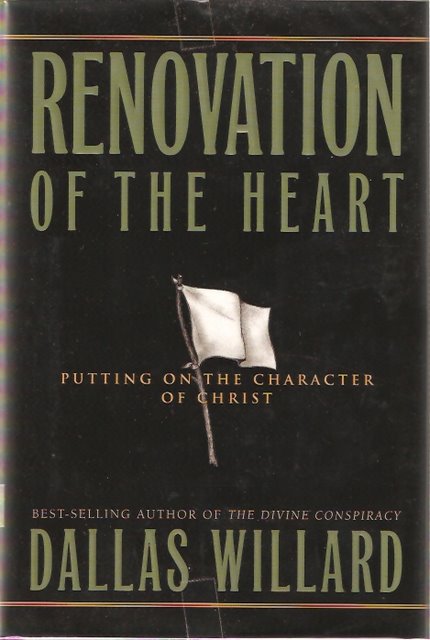
“Spiritual formation for the Christian basically refers to the Spirit-driven process of forming the inner world of the human self in such a way that it becomes the inner being of Christ himself…The result is that the ‘outer’ life of the individual increasingly becomes a natural expression of the inner reality of Jesus and his teachings. Doing what he said and did increasingly becomes part of who we are” (p.22, 159)
If our spiritual life is continually being involved in the process of spiritual formation, then we need not fear that we will slip and fall. Our inner life becomes the life of Christ himself! There is no more solid foundation than Jesus Christ. It is worrying to hear that only 3 out of 10 Christians finished well. It is a good reminder for us not to be complacent but to be continually intentionally involved in the spiritual formation of our souls.
Soli Deo Gloria

Renovation of Our Souls
Recently we have to do some massive renovation to my father’s garden. My father’s house is built on hill slope. After about 10 years, we discovered that the soil in his garden was beginning to shift down the slope. The contractor took a look and shook his head. There was however a gleam in his eyes which may mean that he is thinking; now he can afford to buy a brand new Mercedes! He told us that the soil shifting is due to an inadequate barrier below the house.
What he suggested was that we dig a deep trench around the outer perimeter of the garden. Then he was going sink about a few hundred tree trunks (about 8 feet long each) vertically into the trench. Next he would tie these wooden stakes together with iron bars. Finally he will pour concrete into the trench to fix the whole structure. That should hold the garden in place, he declared. I am sure it will hold the garden in place. It sounds like I am building a fortress.
We would not have been aware that the soil in the garden has shifted if not for a one inch gap appearing at the base of the perimeter wall of the garden. It may be the same for our spiritual life. We come to church regularly to worship and think everything is going well. We think the hymn “It is well with my soul” is describing our spiritual lives.
Some of us may have been Christians for so many years that we have become too comfortable in church. We may not be aware of an inner shift in the soil of our inner spiritual life away from God. Maybe we have been praying less and do not attend prayer meetings anymore. We find less and less time to read the Bible. Where once there was an urgency to share about Jesus with our non-Christian friends, there is none now. We find ourselves putting less and less into the offering bags.
It may even have been years since we regularly examine our lives to see whether we are living a life glorifying to God. We share less and less with each other about what God is doing in our lives. Our emotions are more often full of anger than of gratitude. Anger is a sign that we are not content with what we have. If that is so, we may need to do some renovation in the garden of our souls.
Francis A. Schaeffer writing in True Spirituality (Wheaton, IL: Tyndale House Publishers, 1983) offers some insights,
“The true Christian life, true spirituality, does not mean just that we have been born again. It must begin there, but it means more than that. It does not mean only that we are going to be in heaven. It does mean that, but it means much more than that. The true Christian life, true spirituality in the present life, means more than being justified and knowing that I am going to heaven.
It is not just a desire to get rid of taboos in order to live an easier and looser life. Our desire must be for a deeper life. And when I begin to think of this, the Bible presents to me, the whole of the Ten Commandments and the whole of the Law of Love.
True spirituality, the true Christian life, is not just outward, but it is inward- it is not to covet against God and men.
But it is even more than this: it is positive; positive inward reality, and then positive in outward results. The inward thing is to be positive and not just negative; and then sweeping out of the inward positive reality, there is to be a positive manifestation externally. It is not just that we are dead to certain things, but we are to love God, we are to be alive to him, in this present moment of history. And we are to love men, to be alive to men as men, and to be in communication on a true personal level with men, in this present moment of history” (p.16, 17)
Renovation of garden of our soul starts inwards. We need to shore up the foundations of our lives with the Word of God, the love of God and the empowerment of the Holy Spirit. Our spiritual lives must be in continual movement; vertically in a relationship with God and horizontally in relationships with other people. It must be happening now and always. As Schaeffer said, “in this present moment of history”.
This continuing process of interacting with God and with men as we deepen our inner spiritual life is known as spiritual formation. Dallas Willard explained it better in his book, Renovation of the Heart (Colorado Springs: NavPress 2002)
“Spiritual formation for the Christian basically refers to the Spirit-driven process of forming the inner world of the human self in such a way that it becomes the inner being of Christ himself…The result is that the ‘outer’ life of the individual increasingly becomes a natural expression of the inner reality of Jesus and his teachings. Doing what he said and did increasingly becomes part of who we are” (p.22, 159)
If our spiritual life is continually being involved in the process of spiritual formation, then we need not fear that we will slip and fall. Our inner life becomes the life of Christ himself! There is no more solid foundation than Jesus Christ. It is worrying to hear that only 3 out of 10 Christians finished well. It is a good reminder for us not to be complacent but to be continually intentionally involved in the spiritual formation of our souls.
Soli Deo Gloria
What he suggested was that we dig a deep trench around the outer perimeter of the garden. Then he was going sink about a few hundred tree trunks (about 8 feet long each) vertically into the trench. Next he would tie these wooden stakes together with iron bars. Finally he will pour concrete into the trench to fix the whole structure. That should hold the garden in place, he declared. I am sure it will hold the garden in place. It sounds like I am building a fortress.
We would not have been aware that the soil in the garden has shifted if not for a one inch gap appearing at the base of the perimeter wall of the garden. It may be the same for our spiritual life. We come to church regularly to worship and think everything is going well. We think the hymn “It is well with my soul” is describing our spiritual lives.
Some of us may have been Christians for so many years that we have become too comfortable in church. We may not be aware of an inner shift in the soil of our inner spiritual life away from God. Maybe we have been praying less and do not attend prayer meetings anymore. We find less and less time to read the Bible. Where once there was an urgency to share about Jesus with our non-Christian friends, there is none now. We find ourselves putting less and less into the offering bags.
It may even have been years since we regularly examine our lives to see whether we are living a life glorifying to God. We share less and less with each other about what God is doing in our lives. Our emotions are more often full of anger than of gratitude. Anger is a sign that we are not content with what we have. If that is so, we may need to do some renovation in the garden of our souls.
Francis A. Schaeffer writing in True Spirituality (Wheaton, IL: Tyndale House Publishers, 1983) offers some insights,
“The true Christian life, true spirituality, does not mean just that we have been born again. It must begin there, but it means more than that. It does not mean only that we are going to be in heaven. It does mean that, but it means much more than that. The true Christian life, true spirituality in the present life, means more than being justified and knowing that I am going to heaven.
It is not just a desire to get rid of taboos in order to live an easier and looser life. Our desire must be for a deeper life. And when I begin to think of this, the Bible presents to me, the whole of the Ten Commandments and the whole of the Law of Love.
True spirituality, the true Christian life, is not just outward, but it is inward- it is not to covet against God and men.
But it is even more than this: it is positive; positive inward reality, and then positive in outward results. The inward thing is to be positive and not just negative; and then sweeping out of the inward positive reality, there is to be a positive manifestation externally. It is not just that we are dead to certain things, but we are to love God, we are to be alive to him, in this present moment of history. And we are to love men, to be alive to men as men, and to be in communication on a true personal level with men, in this present moment of history” (p.16, 17)
Renovation of garden of our soul starts inwards. We need to shore up the foundations of our lives with the Word of God, the love of God and the empowerment of the Holy Spirit. Our spiritual lives must be in continual movement; vertically in a relationship with God and horizontally in relationships with other people. It must be happening now and always. As Schaeffer said, “in this present moment of history”.
This continuing process of interacting with God and with men as we deepen our inner spiritual life is known as spiritual formation. Dallas Willard explained it better in his book, Renovation of the Heart (Colorado Springs: NavPress 2002)
“Spiritual formation for the Christian basically refers to the Spirit-driven process of forming the inner world of the human self in such a way that it becomes the inner being of Christ himself…The result is that the ‘outer’ life of the individual increasingly becomes a natural expression of the inner reality of Jesus and his teachings. Doing what he said and did increasingly becomes part of who we are” (p.22, 159)
If our spiritual life is continually being involved in the process of spiritual formation, then we need not fear that we will slip and fall. Our inner life becomes the life of Christ himself! There is no more solid foundation than Jesus Christ. It is worrying to hear that only 3 out of 10 Christians finished well. It is a good reminder for us not to be complacent but to be continually intentionally involved in the spiritual formation of our souls.
Soli Deo Gloria
Wednesday, October 18, 2006
To Be Who We Are Created To Be

Father God, I stand before you now in the middle of a sleeping city.
In the Amazing Spider-man issue "Spider-man No More", Peter Parker/Spider-man that night has to make a decision. [The movie Spider-man 2 is partially based on this storyline]. He is at a cross road, decision making point. One option is for him to hide his superpowers, pretend to be an ordinary man, marry Mary Jane Watson and have a good life. The world will not then have the benefit of his superpowers. The other option is for him to continue to be Spider-man. To do that, he has to keep a secret identity and live a double life. There will be no room for relationships, marriage and family in that night. How is one to choose? For the greater good of all man, but having to live a secretive life? Or to bland into the crowd and be invisible.?And be able to go home to wife and family in the evening.
Father God, I stand before you now, hovering above my notebook. I too have a decision to make. I am also at a cross road, decision making point. The decision involves a church leadership position. To accept or not to accept. Like Spider-man, I have climbed to a high place to meditative, think and pray. A place of solitude to find my heart’s true center.
Father God, you know my heart, my desires and my loyalties. You have give me much; wealth, talents, good wife, family, children and friends. I want to love you and be in your presence forever.
I want to serve you, Lord; I want to be your servant. But, Lord, which kind of servant do you want me to be? You have equipped me and given me powers. You know what type of ministry I am equipped for. In this high place, Lord, please give me your understanding; enlighten me to what role I shall play next.
Teach me, O Lord, to make a decision.
Lord, have mercy
To Be Who We Are Created To Be
Father God, I stand before you now in the middle of a sleeping city.
In the Amazing Spider-man issue "Spider-man No More", Peter Parker/Spider-man that night has to make a decision. [The movie Spider-man 2 is partially based on this storyline]. He is at a cross road, decision making point. One option is for him to hide his superpowers, pretend to be an ordinary man, marry Mary Jane Watson and have a good life. The world will not then have the benefit of his superpowers. The other option is for him to continue to be Spider-man. To do that, he has to keep a secret identity and live a double life. There will be no room for relationships, marriage and family in that night. How is one to choose? For the greater good of all man, but having to live a secretive life? Or to bland into the crowd and be invisible.?And be able to go home to wife and family in the evening.
Father God, I stand before you now, hovering above my notebook. I too have a decision to make. I am also at a cross road, decision making point. The decision involves a church leadership position. To accept or not to accept. Like Spider-man, I have climbed to a high place to meditative, think and pray. A place of solitude to find my heart’s true center.
Father God, you know my heart, my desires and my loyalties. You have give me much; wealth, talents, good wife, family, children and friends. I want to love you and be in your presence forever.
I want to serve you, Lord; I want to be your servant. But, Lord, which kind of servant do you want me to be? You have equipped me and given me powers. You know what type of ministry I am equipped for. In this high place, Lord, please give me your understanding; enlighten me to what role I shall play next.
Teach me, O Lord, to make a decision.
Lord, have mercy
Sunday, October 15, 2006
The Top 50 Books That Have Shaped Evangelicals
Landmark titles that changed the way we think, talk, witness, worship, and live chosen by Christianity Today June 2006
50.Revivalism and Social ReformTimothy L. SmithThe new evangelicals were rightly wary of the liberal "social gospel." Yet they knew Jesus called them to serve the oppressed. Historian Timothy L. Smith destroyed the myth of the "heavenly minded" evangelical and helped us remember our history of personal and social holiness.
49.Knowledge of the HolyA. W. TozerThe Christian and Missionary Alliance pastor and mystic invited us behind the curtain and into God's presence.
48.The Hiding PlaceCorrie ten Boom with John and Elizabeth SherrillThe staple conundrum of late-night ethics discussions in Christian college dorms—Do you lie if the Nazis knock on your door asking for the Jews you are hiding?—was a question ten Boom lived.
47.The New Testament Documents: Are They Reliable?F. F. BruceYes, they are. And it took F. F. Bruce only 120 tiny pages to show it.
46.Out of the Saltshaker and into the WorldRebecca Manley Pippert"Christians and non-Christians have something in common," author Rebecca Pippert noted. "We're both uptight about evangelism." Out of the Saltshaker helped generations of fearful students (and other would-be evangelists) to loosen up.
45.The Scandal of the Evangelical MindMark A. NollFew people have accused evangelicalism of being an intellectual movement—but now we feel bad about it, at least.
44.The Gospel of the KingdomGeorge Eldon LaddLadd's work called a generation of evangelicals to a higher level of scholarship, and his "already-but-not yet" take on God's kingdom influenced charismatic theologians and cessationists alike.
43.Operation WorldPatrick JohnstoneThe who, where, what, why, when, and how many of unreached peoples.
42.The Purpose-Driven LifeRick WarrenA recommended resource to have on hand when faced with a home intruder (a la Ashley Smith) or when seeking to turn around an African nation (a la Rwanda).
41.Born AgainCharles W. ColsonAs we now know, the metamorphosis of a Nixon administration crook into a prison evangelist wasn't just a phase.
40.Darwin on TrialPhillip E. JohnsonThis Berkeley law professor's takedown of scientific naturalism launched Intelligent Design and gained creationists a level of public attention they hadn't enjoyed since the Scopes trial.
39.Desiring GodJohn PiperWho expected a Calvinist Baptist to redeem hedonism for Christ?
38.The Gospel in a Pluralist SocietyLesslie Newbigin"A profound rethinking of missions in a pluralist context," says Wheaton College English professor Alan Jacobs, who nominated the tome.
37.God's SmugglerBrother Andrew with John and Elizabeth SherrillBrother Andrew's autobiography "instilled in me a concern for the persecuted church and ignited courage in my heart to serve those who suffer for Jesus," writes Charisma's editor J. Lee Grady.
36.Left BehindTim LaHaye and Jerry B. JenkinsThe book launched a series that launched a marketing empire that launched a new set of rules for Christian fiction. The series spent a total of 300 weeks—nearly as long as the Tribulation it dramatized—on The New York Times's bestseller list.
35.The Stork Is DeadCharlie W. SheddShedd published his sex advice for teens in 1968 and got evangelicals talking about the topic four years before The Joy of Sex was published.
34.This Present DarknessFrank E. PerettiInterVarsity Press editor Al Hsu says Peretti's horror thriller "challenged evangelicals to take spiritual warfare and the supernatural seriously." Maybe, in some cases, too seriously.
33.The Late Great Planet EarthHal Lindsey with C. C. CarlsonIn the beginning—before the Left Behind series was a sparkle in the cash registers of religious booksellers—there was The Late Great Planet Earth. It's hard to imagine that Jenkins and LaHaye would have sold 43 million copies of their bestsellers if Lindsey hadn't first sold 15 million copies of his dispensationalist hit.
32.The Cross and the SwitchbladeDavid Wilkerson with John and Elizabeth SherrillAmazing things started happening when, in 1958, a country preacher arrived—Bible in hand and Holy Spirit in heart—in the ghettos of New York City. Christian Retailing reports that "more than 50 million copies are in print in 40-plus languages of the book that gave birth to the ministry of Teen Challenge."
31.The Next ChristendomPhilip JenkinsThe Penn State professor confronted North American Christians with the shocking truth that they were not the center of the universe.
30.Roaring LambsRobert BrinerBack in the early '90s, when engaging the culture wasn't the "in" thing to do, Roaring Lambs inspired countless Christian artists to become artists who are Christians.
29.Dare to DisciplineJames DobsonIn the permissive '70s, Dobson did what he still does best—calling us to focus on the family.
28.The Act of MarriageTim and Beverly LaHayeThe explicit marriage manual told men how to satisfy their wives. "Fundies in their undies," joked religion scholar Martin E. Marty.
27.ChristyCatherine MarshallA privileged city girl finds faith and a husband in rural Appalachia—sounds like a TV series to us.
26.Know Why You BelievePaul E. LittleNow we do.
25.BoundariesHenry Cloud and John TownsendSometimes, it's good to say no. This, in a nutshell, is the message that some ministry-weary Christians still need to hear.
24.The Meaning of PersonsPaul TournierSwiss physician Paul Tournier awakened us to the deep interconnectedness of the physical, the emotional, and the spiritual.
23.All We're Meant to BeLetha Dawson Scanzoni and Nancy A. HardestyScanzoni and Hardesty outlined what would later blossom into evangelical feminism. For better or for worse, no evangelical marriage or institution has been able to ignore the ideas in this book.
22.The Genesis FloodHenry M. Morris and John C. WhitcombIn 1961, hydraulic engineer Henry M. Morris and biblical scholar John C. Whitcomb infused young-earth creationism with new energy. They argued that the biblical deluge could explain fossils and geological layers.
21.The Master Plan of EvangelismRobert Emerson ColemanUsing Jesus' methods, Coleman showed the intimate, indispensable relationship between evangelism and discipleship.
20.A Wrinkle In TimeMadeleine L'EngleMadeleine L'Engle told CT that when she tried to be a Christian with her "mind only," she ceased to believe. But then she realized that God was a storyteller. Her 1962 classic modeled the power of imagination to energize belief.
19.The Cost of DiscipleshipDietrich Bonhoeffer"Although cheap grace has entered into the common vocabulary of evangelicals," says theologian Roger Olson, "the full weight of Bonhoeffer's exploration of true Christian discipleship has yet to be borne by many of us." Translated into English in 1949, Bonhoeffer's classic remains a devastating critique of comfortable Christianity.
18.The Divine ConspiracyDallas WillardWith this call to discipleship, "Willard joins the line of Thomas a Kempis, Luther, Fenelon, Brother Lawrence of the Resurrection, Zinzendorf, Wesley, Frank Laubach, Dorothy Day, and other master apprentices of Jesus," wrote Books and Culture editor John Wilson in a review, praising the University of Southern California professor's "philosophical depth" and "penetrating understanding of Scripture."
17.What's So Amazing About Grace?Philip YanceyWith trademark self-deprecation, Yancey wrote: "Grace comes free of charge to people who do not deserve it, and I am one of those people. I think back to who I was—resentful, wound tight with anger, a single hardened link in a long chain of ungrace learned from family and church. Now I am trying in my own small way to pipe the tune of grace. I do so because I know … that any pang of healing or forgiveness or goodness I have ever felt comes solely from the grace of God."
16.Basic ChristianityJohn StottThe slim volume "has introduced more people to Christ than any book I know other than the Bible," says author James Sire.
15.The Uneasy Conscience of Modern FundamentalismF. H. HenryHenry's call to cultural engagement seems unremarkable today. That's because we took his advice to "pursue the enemy, in politics, in economics, in science, in ethics."
14.Let Justice Roll DownJohn M. PerkinsThe civil rights activist got white Christians thinking about his three-pronged solution to America's systemic race problem: relocation, reconciliation, and redistribution.
13.Evidence That Demands a VerdictJosh McDowellWho says faith is only for the heart and not the head? Not Josh McDowell.
12.Power EvangelismJohn Wimber with Kevin SpringerLifestyle evangelism is great, but signs and wonders are spectacular.
11.Celebration of DisciplineRichard J. FosterIt "opened the door for many evangelicals to intentionally practice spiritual disciplines and find a connection with the church throughout history," writes Phyllis Alsdurf, professor of journalism at Bethel College.
10.Evangelism ExplosionD. James KennedyThis more than any other book ("The Four Spiritual Laws" is a pamphlet) gave evangelicals a systematic way to share their faith. It made the question, "If you were to die tonight, do you know for sure that you would go to heaven?" standard evangelistic fare.
9.Through Gates of SplendorElisabeth ElliotThe account of the martyrdom of five young missionaries at the hands of a feared "Stone Age" tribe in Ecuador helped launch a generation of cross-cultural evangelists into the world's hard places. Author Jerry B. Jenkins told CT, "The story left me feeling spiritually slain."
8.Managing Your TimeTed W. EngstromEvangelicals have historically been entrepreneurs and mystics, so we have run into much personal burnout and organizational chaos. With this book, Ted W. Engstrom gave evangelical leaders permission to organize their ministries rationally and efficiently.
7.Rich Christians in an Age of HungerRonald J. Sider"God is on the side of the poor!" Sider writes. To neglect them is to neglect the gospel.
6.The Living BibleKenneth N. TaylorOne of the first in a wave of easy-to-read, modern English versions of the Bible, Kenneth N. Taylor's Living Bible came out in 1971, complete with its signature green cover. Book design has come a long way since then.
5.Knowing GodJ. I. PackerPacker was magisterial in substance, but adopted the tone of a fellow traveler. He convinced us that the study of God "is the most practical project anyone can engage in."
4.The God Who Is ThereFrancis A. Schaeffer"This book, and its companion volumes, accomplished something startling and necessary: It made intellectual history a vital part of the evangelical mental landscape, opening up the worlds particularly of art and philosophy to a subculture that was suspicious and ignorant of both," writes John Stackhouse, professor of theology and culture at Regent College.
3.Mere ChristianityC. S. LewisAnyone who has read this far into the list doesn't need any explanation about why Lewis's work of apologetics placed this high—right?
2.Understanding Church GrowthDonald Anderson McGavranAlthough evangelicals have always been enamored with large and growing numbers (e.g., the Great Awakenings), it was Donald McGavran who gave us phrases such as "church growth" and "the homogeneous unit principle" and who made the endeavor a "science." Today, every pastor in North America has a decided opinion about whether or how much he or she buys into church-growth principles.
1.Prayer: Conversing With GodRosalind RinkerIn the 1950s, evangelical prayer was characterized by Elizabethan wouldsts and shouldsts. Prayer meetings were often little more than a series of formal prayer speeches. Then Rosalind Rinker taught us something revolutionary: Prayer is a conversation with God. The idea took hold, sometimes too much (e.g., "Lord, we just really wanna …"). But today evangelicals assume that casual, colloquial, intimate prayer is the most authentic way to pray.
Copyright © 2006 Christianity Today
50.Revivalism and Social ReformTimothy L. SmithThe new evangelicals were rightly wary of the liberal "social gospel." Yet they knew Jesus called them to serve the oppressed. Historian Timothy L. Smith destroyed the myth of the "heavenly minded" evangelical and helped us remember our history of personal and social holiness.
49.Knowledge of the HolyA. W. TozerThe Christian and Missionary Alliance pastor and mystic invited us behind the curtain and into God's presence.
48.The Hiding PlaceCorrie ten Boom with John and Elizabeth SherrillThe staple conundrum of late-night ethics discussions in Christian college dorms—Do you lie if the Nazis knock on your door asking for the Jews you are hiding?—was a question ten Boom lived.
47.The New Testament Documents: Are They Reliable?F. F. BruceYes, they are. And it took F. F. Bruce only 120 tiny pages to show it.
46.Out of the Saltshaker and into the WorldRebecca Manley Pippert"Christians and non-Christians have something in common," author Rebecca Pippert noted. "We're both uptight about evangelism." Out of the Saltshaker helped generations of fearful students (and other would-be evangelists) to loosen up.
45.The Scandal of the Evangelical MindMark A. NollFew people have accused evangelicalism of being an intellectual movement—but now we feel bad about it, at least.
44.The Gospel of the KingdomGeorge Eldon LaddLadd's work called a generation of evangelicals to a higher level of scholarship, and his "already-but-not yet" take on God's kingdom influenced charismatic theologians and cessationists alike.
43.Operation WorldPatrick JohnstoneThe who, where, what, why, when, and how many of unreached peoples.
42.The Purpose-Driven LifeRick WarrenA recommended resource to have on hand when faced with a home intruder (a la Ashley Smith) or when seeking to turn around an African nation (a la Rwanda).
41.Born AgainCharles W. ColsonAs we now know, the metamorphosis of a Nixon administration crook into a prison evangelist wasn't just a phase.
40.Darwin on TrialPhillip E. JohnsonThis Berkeley law professor's takedown of scientific naturalism launched Intelligent Design and gained creationists a level of public attention they hadn't enjoyed since the Scopes trial.
39.Desiring GodJohn PiperWho expected a Calvinist Baptist to redeem hedonism for Christ?
38.The Gospel in a Pluralist SocietyLesslie Newbigin"A profound rethinking of missions in a pluralist context," says Wheaton College English professor Alan Jacobs, who nominated the tome.
37.God's SmugglerBrother Andrew with John and Elizabeth SherrillBrother Andrew's autobiography "instilled in me a concern for the persecuted church and ignited courage in my heart to serve those who suffer for Jesus," writes Charisma's editor J. Lee Grady.
36.Left BehindTim LaHaye and Jerry B. JenkinsThe book launched a series that launched a marketing empire that launched a new set of rules for Christian fiction. The series spent a total of 300 weeks—nearly as long as the Tribulation it dramatized—on The New York Times's bestseller list.
35.The Stork Is DeadCharlie W. SheddShedd published his sex advice for teens in 1968 and got evangelicals talking about the topic four years before The Joy of Sex was published.
34.This Present DarknessFrank E. PerettiInterVarsity Press editor Al Hsu says Peretti's horror thriller "challenged evangelicals to take spiritual warfare and the supernatural seriously." Maybe, in some cases, too seriously.
33.The Late Great Planet EarthHal Lindsey with C. C. CarlsonIn the beginning—before the Left Behind series was a sparkle in the cash registers of religious booksellers—there was The Late Great Planet Earth. It's hard to imagine that Jenkins and LaHaye would have sold 43 million copies of their bestsellers if Lindsey hadn't first sold 15 million copies of his dispensationalist hit.
32.The Cross and the SwitchbladeDavid Wilkerson with John and Elizabeth SherrillAmazing things started happening when, in 1958, a country preacher arrived—Bible in hand and Holy Spirit in heart—in the ghettos of New York City. Christian Retailing reports that "more than 50 million copies are in print in 40-plus languages of the book that gave birth to the ministry of Teen Challenge."
31.The Next ChristendomPhilip JenkinsThe Penn State professor confronted North American Christians with the shocking truth that they were not the center of the universe.
30.Roaring LambsRobert BrinerBack in the early '90s, when engaging the culture wasn't the "in" thing to do, Roaring Lambs inspired countless Christian artists to become artists who are Christians.
29.Dare to DisciplineJames DobsonIn the permissive '70s, Dobson did what he still does best—calling us to focus on the family.
28.The Act of MarriageTim and Beverly LaHayeThe explicit marriage manual told men how to satisfy their wives. "Fundies in their undies," joked religion scholar Martin E. Marty.
27.ChristyCatherine MarshallA privileged city girl finds faith and a husband in rural Appalachia—sounds like a TV series to us.
26.Know Why You BelievePaul E. LittleNow we do.
25.BoundariesHenry Cloud and John TownsendSometimes, it's good to say no. This, in a nutshell, is the message that some ministry-weary Christians still need to hear.
24.The Meaning of PersonsPaul TournierSwiss physician Paul Tournier awakened us to the deep interconnectedness of the physical, the emotional, and the spiritual.
23.All We're Meant to BeLetha Dawson Scanzoni and Nancy A. HardestyScanzoni and Hardesty outlined what would later blossom into evangelical feminism. For better or for worse, no evangelical marriage or institution has been able to ignore the ideas in this book.
22.The Genesis FloodHenry M. Morris and John C. WhitcombIn 1961, hydraulic engineer Henry M. Morris and biblical scholar John C. Whitcomb infused young-earth creationism with new energy. They argued that the biblical deluge could explain fossils and geological layers.
21.The Master Plan of EvangelismRobert Emerson ColemanUsing Jesus' methods, Coleman showed the intimate, indispensable relationship between evangelism and discipleship.
20.A Wrinkle In TimeMadeleine L'EngleMadeleine L'Engle told CT that when she tried to be a Christian with her "mind only," she ceased to believe. But then she realized that God was a storyteller. Her 1962 classic modeled the power of imagination to energize belief.
19.The Cost of DiscipleshipDietrich Bonhoeffer"Although cheap grace has entered into the common vocabulary of evangelicals," says theologian Roger Olson, "the full weight of Bonhoeffer's exploration of true Christian discipleship has yet to be borne by many of us." Translated into English in 1949, Bonhoeffer's classic remains a devastating critique of comfortable Christianity.
18.The Divine ConspiracyDallas WillardWith this call to discipleship, "Willard joins the line of Thomas a Kempis, Luther, Fenelon, Brother Lawrence of the Resurrection, Zinzendorf, Wesley, Frank Laubach, Dorothy Day, and other master apprentices of Jesus," wrote Books and Culture editor John Wilson in a review, praising the University of Southern California professor's "philosophical depth" and "penetrating understanding of Scripture."
17.What's So Amazing About Grace?Philip YanceyWith trademark self-deprecation, Yancey wrote: "Grace comes free of charge to people who do not deserve it, and I am one of those people. I think back to who I was—resentful, wound tight with anger, a single hardened link in a long chain of ungrace learned from family and church. Now I am trying in my own small way to pipe the tune of grace. I do so because I know … that any pang of healing or forgiveness or goodness I have ever felt comes solely from the grace of God."
16.Basic ChristianityJohn StottThe slim volume "has introduced more people to Christ than any book I know other than the Bible," says author James Sire.
15.The Uneasy Conscience of Modern FundamentalismF. H. HenryHenry's call to cultural engagement seems unremarkable today. That's because we took his advice to "pursue the enemy, in politics, in economics, in science, in ethics."
14.Let Justice Roll DownJohn M. PerkinsThe civil rights activist got white Christians thinking about his three-pronged solution to America's systemic race problem: relocation, reconciliation, and redistribution.
13.Evidence That Demands a VerdictJosh McDowellWho says faith is only for the heart and not the head? Not Josh McDowell.
12.Power EvangelismJohn Wimber with Kevin SpringerLifestyle evangelism is great, but signs and wonders are spectacular.
11.Celebration of DisciplineRichard J. FosterIt "opened the door for many evangelicals to intentionally practice spiritual disciplines and find a connection with the church throughout history," writes Phyllis Alsdurf, professor of journalism at Bethel College.
10.Evangelism ExplosionD. James KennedyThis more than any other book ("The Four Spiritual Laws" is a pamphlet) gave evangelicals a systematic way to share their faith. It made the question, "If you were to die tonight, do you know for sure that you would go to heaven?" standard evangelistic fare.
9.Through Gates of SplendorElisabeth ElliotThe account of the martyrdom of five young missionaries at the hands of a feared "Stone Age" tribe in Ecuador helped launch a generation of cross-cultural evangelists into the world's hard places. Author Jerry B. Jenkins told CT, "The story left me feeling spiritually slain."
8.Managing Your TimeTed W. EngstromEvangelicals have historically been entrepreneurs and mystics, so we have run into much personal burnout and organizational chaos. With this book, Ted W. Engstrom gave evangelical leaders permission to organize their ministries rationally and efficiently.
7.Rich Christians in an Age of HungerRonald J. Sider"God is on the side of the poor!" Sider writes. To neglect them is to neglect the gospel.
6.The Living BibleKenneth N. TaylorOne of the first in a wave of easy-to-read, modern English versions of the Bible, Kenneth N. Taylor's Living Bible came out in 1971, complete with its signature green cover. Book design has come a long way since then.
5.Knowing GodJ. I. PackerPacker was magisterial in substance, but adopted the tone of a fellow traveler. He convinced us that the study of God "is the most practical project anyone can engage in."
4.The God Who Is ThereFrancis A. Schaeffer"This book, and its companion volumes, accomplished something startling and necessary: It made intellectual history a vital part of the evangelical mental landscape, opening up the worlds particularly of art and philosophy to a subculture that was suspicious and ignorant of both," writes John Stackhouse, professor of theology and culture at Regent College.
3.Mere ChristianityC. S. LewisAnyone who has read this far into the list doesn't need any explanation about why Lewis's work of apologetics placed this high—right?
2.Understanding Church GrowthDonald Anderson McGavranAlthough evangelicals have always been enamored with large and growing numbers (e.g., the Great Awakenings), it was Donald McGavran who gave us phrases such as "church growth" and "the homogeneous unit principle" and who made the endeavor a "science." Today, every pastor in North America has a decided opinion about whether or how much he or she buys into church-growth principles.
1.Prayer: Conversing With GodRosalind RinkerIn the 1950s, evangelical prayer was characterized by Elizabethan wouldsts and shouldsts. Prayer meetings were often little more than a series of formal prayer speeches. Then Rosalind Rinker taught us something revolutionary: Prayer is a conversation with God. The idea took hold, sometimes too much (e.g., "Lord, we just really wanna …"). But today evangelicals assume that casual, colloquial, intimate prayer is the most authentic way to pray.
Copyright © 2006 Christianity Today
The Top 50 Books That Have Shaped Evangelicals
Landmark titles that changed the way we think, talk, witness, worship, and live chosen by Christianity Today June 2006
50.Revivalism and Social ReformTimothy L. SmithThe new evangelicals were rightly wary of the liberal "social gospel." Yet they knew Jesus called them to serve the oppressed. Historian Timothy L. Smith destroyed the myth of the "heavenly minded" evangelical and helped us remember our history of personal and social holiness.
49.Knowledge of the HolyA. W. TozerThe Christian and Missionary Alliance pastor and mystic invited us behind the curtain and into God's presence.
48.The Hiding PlaceCorrie ten Boom with John and Elizabeth SherrillThe staple conundrum of late-night ethics discussions in Christian college dorms—Do you lie if the Nazis knock on your door asking for the Jews you are hiding?—was a question ten Boom lived.
47.The New Testament Documents: Are They Reliable?F. F. BruceYes, they are. And it took F. F. Bruce only 120 tiny pages to show it.
46.Out of the Saltshaker and into the WorldRebecca Manley Pippert"Christians and non-Christians have something in common," author Rebecca Pippert noted. "We're both uptight about evangelism." Out of the Saltshaker helped generations of fearful students (and other would-be evangelists) to loosen up.
45.The Scandal of the Evangelical MindMark A. NollFew people have accused evangelicalism of being an intellectual movement—but now we feel bad about it, at least.
44.The Gospel of the KingdomGeorge Eldon LaddLadd's work called a generation of evangelicals to a higher level of scholarship, and his "already-but-not yet" take on God's kingdom influenced charismatic theologians and cessationists alike.
43.Operation WorldPatrick JohnstoneThe who, where, what, why, when, and how many of unreached peoples.
42.The Purpose-Driven LifeRick WarrenA recommended resource to have on hand when faced with a home intruder (a la Ashley Smith) or when seeking to turn around an African nation (a la Rwanda).
41.Born AgainCharles W. ColsonAs we now know, the metamorphosis of a Nixon administration crook into a prison evangelist wasn't just a phase.
40.Darwin on TrialPhillip E. JohnsonThis Berkeley law professor's takedown of scientific naturalism launched Intelligent Design and gained creationists a level of public attention they hadn't enjoyed since the Scopes trial.
39.Desiring GodJohn PiperWho expected a Calvinist Baptist to redeem hedonism for Christ?
38.The Gospel in a Pluralist SocietyLesslie Newbigin"A profound rethinking of missions in a pluralist context," says Wheaton College English professor Alan Jacobs, who nominated the tome.
37.God's SmugglerBrother Andrew with John and Elizabeth SherrillBrother Andrew's autobiography "instilled in me a concern for the persecuted church and ignited courage in my heart to serve those who suffer for Jesus," writes Charisma's editor J. Lee Grady.
36.Left BehindTim LaHaye and Jerry B. JenkinsThe book launched a series that launched a marketing empire that launched a new set of rules for Christian fiction. The series spent a total of 300 weeks—nearly as long as the Tribulation it dramatized—on The New York Times's bestseller list.
35.The Stork Is DeadCharlie W. SheddShedd published his sex advice for teens in 1968 and got evangelicals talking about the topic four years before The Joy of Sex was published.
34.This Present DarknessFrank E. PerettiInterVarsity Press editor Al Hsu says Peretti's horror thriller "challenged evangelicals to take spiritual warfare and the supernatural seriously." Maybe, in some cases, too seriously.
33.The Late Great Planet EarthHal Lindsey with C. C. CarlsonIn the beginning—before the Left Behind series was a sparkle in the cash registers of religious booksellers—there was The Late Great Planet Earth. It's hard to imagine that Jenkins and LaHaye would have sold 43 million copies of their bestsellers if Lindsey hadn't first sold 15 million copies of his dispensationalist hit.
32.The Cross and the SwitchbladeDavid Wilkerson with John and Elizabeth SherrillAmazing things started happening when, in 1958, a country preacher arrived—Bible in hand and Holy Spirit in heart—in the ghettos of New York City. Christian Retailing reports that "more than 50 million copies are in print in 40-plus languages of the book that gave birth to the ministry of Teen Challenge."
31.The Next ChristendomPhilip JenkinsThe Penn State professor confronted North American Christians with the shocking truth that they were not the center of the universe.
30.Roaring LambsRobert BrinerBack in the early '90s, when engaging the culture wasn't the "in" thing to do, Roaring Lambs inspired countless Christian artists to become artists who are Christians.
29.Dare to DisciplineJames DobsonIn the permissive '70s, Dobson did what he still does best—calling us to focus on the family.
28.The Act of MarriageTim and Beverly LaHayeThe explicit marriage manual told men how to satisfy their wives. "Fundies in their undies," joked religion scholar Martin E. Marty.
27.ChristyCatherine MarshallA privileged city girl finds faith and a husband in rural Appalachia—sounds like a TV series to us.
26.Know Why You BelievePaul E. LittleNow we do.
25.BoundariesHenry Cloud and John TownsendSometimes, it's good to say no. This, in a nutshell, is the message that some ministry-weary Christians still need to hear.
24.The Meaning of PersonsPaul TournierSwiss physician Paul Tournier awakened us to the deep interconnectedness of the physical, the emotional, and the spiritual.
23.All We're Meant to BeLetha Dawson Scanzoni and Nancy A. HardestyScanzoni and Hardesty outlined what would later blossom into evangelical feminism. For better or for worse, no evangelical marriage or institution has been able to ignore the ideas in this book.
22.The Genesis FloodHenry M. Morris and John C. WhitcombIn 1961, hydraulic engineer Henry M. Morris and biblical scholar John C. Whitcomb infused young-earth creationism with new energy. They argued that the biblical deluge could explain fossils and geological layers.
21.The Master Plan of EvangelismRobert Emerson ColemanUsing Jesus' methods, Coleman showed the intimate, indispensable relationship between evangelism and discipleship.
20.A Wrinkle In TimeMadeleine L'EngleMadeleine L'Engle told CT that when she tried to be a Christian with her "mind only," she ceased to believe. But then she realized that God was a storyteller. Her 1962 classic modeled the power of imagination to energize belief.
19.The Cost of DiscipleshipDietrich Bonhoeffer"Although cheap grace has entered into the common vocabulary of evangelicals," says theologian Roger Olson, "the full weight of Bonhoeffer's exploration of true Christian discipleship has yet to be borne by many of us." Translated into English in 1949, Bonhoeffer's classic remains a devastating critique of comfortable Christianity.
18.The Divine ConspiracyDallas WillardWith this call to discipleship, "Willard joins the line of Thomas a Kempis, Luther, Fenelon, Brother Lawrence of the Resurrection, Zinzendorf, Wesley, Frank Laubach, Dorothy Day, and other master apprentices of Jesus," wrote Books and Culture editor John Wilson in a review, praising the University of Southern California professor's "philosophical depth" and "penetrating understanding of Scripture."
17.What's So Amazing About Grace?Philip YanceyWith trademark self-deprecation, Yancey wrote: "Grace comes free of charge to people who do not deserve it, and I am one of those people. I think back to who I was—resentful, wound tight with anger, a single hardened link in a long chain of ungrace learned from family and church. Now I am trying in my own small way to pipe the tune of grace. I do so because I know … that any pang of healing or forgiveness or goodness I have ever felt comes solely from the grace of God."
16.Basic ChristianityJohn StottThe slim volume "has introduced more people to Christ than any book I know other than the Bible," says author James Sire.
15.The Uneasy Conscience of Modern FundamentalismF. H. HenryHenry's call to cultural engagement seems unremarkable today. That's because we took his advice to "pursue the enemy, in politics, in economics, in science, in ethics."
14.Let Justice Roll DownJohn M. PerkinsThe civil rights activist got white Christians thinking about his three-pronged solution to America's systemic race problem: relocation, reconciliation, and redistribution.
13.Evidence That Demands a VerdictJosh McDowellWho says faith is only for the heart and not the head? Not Josh McDowell.
12.Power EvangelismJohn Wimber with Kevin SpringerLifestyle evangelism is great, but signs and wonders are spectacular.
11.Celebration of DisciplineRichard J. FosterIt "opened the door for many evangelicals to intentionally practice spiritual disciplines and find a connection with the church throughout history," writes Phyllis Alsdurf, professor of journalism at Bethel College.
10.Evangelism ExplosionD. James KennedyThis more than any other book ("The Four Spiritual Laws" is a pamphlet) gave evangelicals a systematic way to share their faith. It made the question, "If you were to die tonight, do you know for sure that you would go to heaven?" standard evangelistic fare.
9.Through Gates of SplendorElisabeth ElliotThe account of the martyrdom of five young missionaries at the hands of a feared "Stone Age" tribe in Ecuador helped launch a generation of cross-cultural evangelists into the world's hard places. Author Jerry B. Jenkins told CT, "The story left me feeling spiritually slain."
8.Managing Your TimeTed W. EngstromEvangelicals have historically been entrepreneurs and mystics, so we have run into much personal burnout and organizational chaos. With this book, Ted W. Engstrom gave evangelical leaders permission to organize their ministries rationally and efficiently.
7.Rich Christians in an Age of HungerRonald J. Sider"God is on the side of the poor!" Sider writes. To neglect them is to neglect the gospel.
6.The Living BibleKenneth N. TaylorOne of the first in a wave of easy-to-read, modern English versions of the Bible, Kenneth N. Taylor's Living Bible came out in 1971, complete with its signature green cover. Book design has come a long way since then.
5.Knowing GodJ. I. PackerPacker was magisterial in substance, but adopted the tone of a fellow traveler. He convinced us that the study of God "is the most practical project anyone can engage in."
4.The God Who Is ThereFrancis A. Schaeffer"This book, and its companion volumes, accomplished something startling and necessary: It made intellectual history a vital part of the evangelical mental landscape, opening up the worlds particularly of art and philosophy to a subculture that was suspicious and ignorant of both," writes John Stackhouse, professor of theology and culture at Regent College.
3.Mere ChristianityC. S. LewisAnyone who has read this far into the list doesn't need any explanation about why Lewis's work of apologetics placed this high—right?
2.Understanding Church GrowthDonald Anderson McGavranAlthough evangelicals have always been enamored with large and growing numbers (e.g., the Great Awakenings), it was Donald McGavran who gave us phrases such as "church growth" and "the homogeneous unit principle" and who made the endeavor a "science." Today, every pastor in North America has a decided opinion about whether or how much he or she buys into church-growth principles.
1.Prayer: Conversing With GodRosalind RinkerIn the 1950s, evangelical prayer was characterized by Elizabethan wouldsts and shouldsts. Prayer meetings were often little more than a series of formal prayer speeches. Then Rosalind Rinker taught us something revolutionary: Prayer is a conversation with God. The idea took hold, sometimes too much (e.g., "Lord, we just really wanna …"). But today evangelicals assume that casual, colloquial, intimate prayer is the most authentic way to pray.
Copyright © 2006 Christianity Today
50.Revivalism and Social ReformTimothy L. SmithThe new evangelicals were rightly wary of the liberal "social gospel." Yet they knew Jesus called them to serve the oppressed. Historian Timothy L. Smith destroyed the myth of the "heavenly minded" evangelical and helped us remember our history of personal and social holiness.
49.Knowledge of the HolyA. W. TozerThe Christian and Missionary Alliance pastor and mystic invited us behind the curtain and into God's presence.
48.The Hiding PlaceCorrie ten Boom with John and Elizabeth SherrillThe staple conundrum of late-night ethics discussions in Christian college dorms—Do you lie if the Nazis knock on your door asking for the Jews you are hiding?—was a question ten Boom lived.
47.The New Testament Documents: Are They Reliable?F. F. BruceYes, they are. And it took F. F. Bruce only 120 tiny pages to show it.
46.Out of the Saltshaker and into the WorldRebecca Manley Pippert"Christians and non-Christians have something in common," author Rebecca Pippert noted. "We're both uptight about evangelism." Out of the Saltshaker helped generations of fearful students (and other would-be evangelists) to loosen up.
45.The Scandal of the Evangelical MindMark A. NollFew people have accused evangelicalism of being an intellectual movement—but now we feel bad about it, at least.
44.The Gospel of the KingdomGeorge Eldon LaddLadd's work called a generation of evangelicals to a higher level of scholarship, and his "already-but-not yet" take on God's kingdom influenced charismatic theologians and cessationists alike.
43.Operation WorldPatrick JohnstoneThe who, where, what, why, when, and how many of unreached peoples.
42.The Purpose-Driven LifeRick WarrenA recommended resource to have on hand when faced with a home intruder (a la Ashley Smith) or when seeking to turn around an African nation (a la Rwanda).
41.Born AgainCharles W. ColsonAs we now know, the metamorphosis of a Nixon administration crook into a prison evangelist wasn't just a phase.
40.Darwin on TrialPhillip E. JohnsonThis Berkeley law professor's takedown of scientific naturalism launched Intelligent Design and gained creationists a level of public attention they hadn't enjoyed since the Scopes trial.
39.Desiring GodJohn PiperWho expected a Calvinist Baptist to redeem hedonism for Christ?
38.The Gospel in a Pluralist SocietyLesslie Newbigin"A profound rethinking of missions in a pluralist context," says Wheaton College English professor Alan Jacobs, who nominated the tome.
37.God's SmugglerBrother Andrew with John and Elizabeth SherrillBrother Andrew's autobiography "instilled in me a concern for the persecuted church and ignited courage in my heart to serve those who suffer for Jesus," writes Charisma's editor J. Lee Grady.
36.Left BehindTim LaHaye and Jerry B. JenkinsThe book launched a series that launched a marketing empire that launched a new set of rules for Christian fiction. The series spent a total of 300 weeks—nearly as long as the Tribulation it dramatized—on The New York Times's bestseller list.
35.The Stork Is DeadCharlie W. SheddShedd published his sex advice for teens in 1968 and got evangelicals talking about the topic four years before The Joy of Sex was published.
34.This Present DarknessFrank E. PerettiInterVarsity Press editor Al Hsu says Peretti's horror thriller "challenged evangelicals to take spiritual warfare and the supernatural seriously." Maybe, in some cases, too seriously.
33.The Late Great Planet EarthHal Lindsey with C. C. CarlsonIn the beginning—before the Left Behind series was a sparkle in the cash registers of religious booksellers—there was The Late Great Planet Earth. It's hard to imagine that Jenkins and LaHaye would have sold 43 million copies of their bestsellers if Lindsey hadn't first sold 15 million copies of his dispensationalist hit.
32.The Cross and the SwitchbladeDavid Wilkerson with John and Elizabeth SherrillAmazing things started happening when, in 1958, a country preacher arrived—Bible in hand and Holy Spirit in heart—in the ghettos of New York City. Christian Retailing reports that "more than 50 million copies are in print in 40-plus languages of the book that gave birth to the ministry of Teen Challenge."
31.The Next ChristendomPhilip JenkinsThe Penn State professor confronted North American Christians with the shocking truth that they were not the center of the universe.
30.Roaring LambsRobert BrinerBack in the early '90s, when engaging the culture wasn't the "in" thing to do, Roaring Lambs inspired countless Christian artists to become artists who are Christians.
29.Dare to DisciplineJames DobsonIn the permissive '70s, Dobson did what he still does best—calling us to focus on the family.
28.The Act of MarriageTim and Beverly LaHayeThe explicit marriage manual told men how to satisfy their wives. "Fundies in their undies," joked religion scholar Martin E. Marty.
27.ChristyCatherine MarshallA privileged city girl finds faith and a husband in rural Appalachia—sounds like a TV series to us.
26.Know Why You BelievePaul E. LittleNow we do.
25.BoundariesHenry Cloud and John TownsendSometimes, it's good to say no. This, in a nutshell, is the message that some ministry-weary Christians still need to hear.
24.The Meaning of PersonsPaul TournierSwiss physician Paul Tournier awakened us to the deep interconnectedness of the physical, the emotional, and the spiritual.
23.All We're Meant to BeLetha Dawson Scanzoni and Nancy A. HardestyScanzoni and Hardesty outlined what would later blossom into evangelical feminism. For better or for worse, no evangelical marriage or institution has been able to ignore the ideas in this book.
22.The Genesis FloodHenry M. Morris and John C. WhitcombIn 1961, hydraulic engineer Henry M. Morris and biblical scholar John C. Whitcomb infused young-earth creationism with new energy. They argued that the biblical deluge could explain fossils and geological layers.
21.The Master Plan of EvangelismRobert Emerson ColemanUsing Jesus' methods, Coleman showed the intimate, indispensable relationship between evangelism and discipleship.
20.A Wrinkle In TimeMadeleine L'EngleMadeleine L'Engle told CT that when she tried to be a Christian with her "mind only," she ceased to believe. But then she realized that God was a storyteller. Her 1962 classic modeled the power of imagination to energize belief.
19.The Cost of DiscipleshipDietrich Bonhoeffer"Although cheap grace has entered into the common vocabulary of evangelicals," says theologian Roger Olson, "the full weight of Bonhoeffer's exploration of true Christian discipleship has yet to be borne by many of us." Translated into English in 1949, Bonhoeffer's classic remains a devastating critique of comfortable Christianity.
18.The Divine ConspiracyDallas WillardWith this call to discipleship, "Willard joins the line of Thomas a Kempis, Luther, Fenelon, Brother Lawrence of the Resurrection, Zinzendorf, Wesley, Frank Laubach, Dorothy Day, and other master apprentices of Jesus," wrote Books and Culture editor John Wilson in a review, praising the University of Southern California professor's "philosophical depth" and "penetrating understanding of Scripture."
17.What's So Amazing About Grace?Philip YanceyWith trademark self-deprecation, Yancey wrote: "Grace comes free of charge to people who do not deserve it, and I am one of those people. I think back to who I was—resentful, wound tight with anger, a single hardened link in a long chain of ungrace learned from family and church. Now I am trying in my own small way to pipe the tune of grace. I do so because I know … that any pang of healing or forgiveness or goodness I have ever felt comes solely from the grace of God."
16.Basic ChristianityJohn StottThe slim volume "has introduced more people to Christ than any book I know other than the Bible," says author James Sire.
15.The Uneasy Conscience of Modern FundamentalismF. H. HenryHenry's call to cultural engagement seems unremarkable today. That's because we took his advice to "pursue the enemy, in politics, in economics, in science, in ethics."
14.Let Justice Roll DownJohn M. PerkinsThe civil rights activist got white Christians thinking about his three-pronged solution to America's systemic race problem: relocation, reconciliation, and redistribution.
13.Evidence That Demands a VerdictJosh McDowellWho says faith is only for the heart and not the head? Not Josh McDowell.
12.Power EvangelismJohn Wimber with Kevin SpringerLifestyle evangelism is great, but signs and wonders are spectacular.
11.Celebration of DisciplineRichard J. FosterIt "opened the door for many evangelicals to intentionally practice spiritual disciplines and find a connection with the church throughout history," writes Phyllis Alsdurf, professor of journalism at Bethel College.
10.Evangelism ExplosionD. James KennedyThis more than any other book ("The Four Spiritual Laws" is a pamphlet) gave evangelicals a systematic way to share their faith. It made the question, "If you were to die tonight, do you know for sure that you would go to heaven?" standard evangelistic fare.
9.Through Gates of SplendorElisabeth ElliotThe account of the martyrdom of five young missionaries at the hands of a feared "Stone Age" tribe in Ecuador helped launch a generation of cross-cultural evangelists into the world's hard places. Author Jerry B. Jenkins told CT, "The story left me feeling spiritually slain."
8.Managing Your TimeTed W. EngstromEvangelicals have historically been entrepreneurs and mystics, so we have run into much personal burnout and organizational chaos. With this book, Ted W. Engstrom gave evangelical leaders permission to organize their ministries rationally and efficiently.
7.Rich Christians in an Age of HungerRonald J. Sider"God is on the side of the poor!" Sider writes. To neglect them is to neglect the gospel.
6.The Living BibleKenneth N. TaylorOne of the first in a wave of easy-to-read, modern English versions of the Bible, Kenneth N. Taylor's Living Bible came out in 1971, complete with its signature green cover. Book design has come a long way since then.
5.Knowing GodJ. I. PackerPacker was magisterial in substance, but adopted the tone of a fellow traveler. He convinced us that the study of God "is the most practical project anyone can engage in."
4.The God Who Is ThereFrancis A. Schaeffer"This book, and its companion volumes, accomplished something startling and necessary: It made intellectual history a vital part of the evangelical mental landscape, opening up the worlds particularly of art and philosophy to a subculture that was suspicious and ignorant of both," writes John Stackhouse, professor of theology and culture at Regent College.
3.Mere ChristianityC. S. LewisAnyone who has read this far into the list doesn't need any explanation about why Lewis's work of apologetics placed this high—right?
2.Understanding Church GrowthDonald Anderson McGavranAlthough evangelicals have always been enamored with large and growing numbers (e.g., the Great Awakenings), it was Donald McGavran who gave us phrases such as "church growth" and "the homogeneous unit principle" and who made the endeavor a "science." Today, every pastor in North America has a decided opinion about whether or how much he or she buys into church-growth principles.
1.Prayer: Conversing With GodRosalind RinkerIn the 1950s, evangelical prayer was characterized by Elizabethan wouldsts and shouldsts. Prayer meetings were often little more than a series of formal prayer speeches. Then Rosalind Rinker taught us something revolutionary: Prayer is a conversation with God. The idea took hold, sometimes too much (e.g., "Lord, we just really wanna …"). But today evangelicals assume that casual, colloquial, intimate prayer is the most authentic way to pray.
Copyright © 2006 Christianity Today
Ultimate Superhero Previews

I love the beautiful artwork done by Bryan Hitch on the cover of EMPIRE November 2006 issue. I am looking forward to the coming years' offerings of Spiderman 3, Silver Surfer, Ghost Rider, Iron Man (finally) and Captain America. Who could play Captain America. EMPIRE offers Martin Henderson, Aaron Eckhart and Will Smith (huh!). I will love to see the Mighty Thor on the big screen.
Marvel seems to have bounced back from being a bankrupt comic book firm to become Hollywood's hottest money spinners. In 8 years, Marvel has produced 13 movies which grossed them more than four billion dollars!
Blade (1998) $131 million
X-Men (2000) $ 296 million
Blade II (2002) $155 million
Spider-man (2002) $822 million
Daredevil (2003) $179 million
X-Men II (2003) $408 million
Hulk (2003) $245 million
The Punisher (2004) $55 million
Spider-man II (2004) $784 million
Blade: Trinity (2004) $129 million
Elektra (2005) $57 million
Fantastic Four (2005) $330 million
X-Men: The Last Stand (2006) $446 million
This does not include the DC comics superheroes such as the Batman (begins, begun, begone) and Superman (returns, returning, and still returning). While it translate to a lot of money for these franchises, it also meant that many people are watching these movies at the cinemia (not to mention even more watching them on VCD and DVDs). The question is why are so many people watching these superheroes movies?
While we cannot exclude that the special effects are spectacular, that may not be the only reason. I would suggest that these movies are popular because of our inherent need for heroes.
Since 9/11, the world have proved to be a darker and more dangerous place. And many of us have felt betrayed by our own leaders and governments. Presidents have lied through their teeth. One country invaded another on the flimsiest of pretence. So we looked for heroes; those whom we can trust, who will not betray us for their own agendas. We looked at sports persons, supermodels, actors/actresses and even talentime winners (American/Malaysia/Singapore idols). Yet one by one, our heroes displayed their clay feet and fell.
So we turn back to our proven heroes from the comic books. These guys are dependable. They will sacrifice everything for the good of others. Their motto is "with great power, comes great responsibilies". What if they are a conflicted adolescent (Peter Parker/Spiderman), a man who needs anger management (Bruce Banner/Hulk), a psychiatrist's nighmare (Bruce Wayne/Batman), a die-hard idealist (Steve Rogers/Captain America), a fallen Catholic (Matt Murdock/Daredevil) or have problem with pride (Banner/Thor). Flawed in their own ways, we knew they will come through in the end. We knew that they will give up everything, put aside their problems and save us. In failing to find heroes in the real world, we escape for a few hours at least, to a world where Good always triumph in the end-a bit bruised, of course.
And coming back to the real world, we find that we still need superheroes. Chesterton said that the extraordinary people are the ordinary people living ordinary lives. These are our superheroes.
Subscribe to:
Posts (Atom)