Tuesday, October 31, 2006

John Wesley and the Reflective Christian

John Wesley’s class meetings were at the forefront of the development of the Methodist movement for many years. This was at the early stage of the development of Methodism. Wesley at that time was still a part of the Anglican Church. Aside from his preaching, one of his concentrations was on class meetings which were mainly small group meetings of 6-8 persons. They would meet weekly at regular places. Attendance was monitored and there were certain stringent requirements to be part of the group.

They were expected to attend most of the meetings, do the regular Bible reading and family prayers, work regularly among the poor and tithe to their churches. An important point of this class meetings were the self-reflection to be done before and during the meeting. This is not a private affair that is so common among our culture but these self-reflections will be discussed among the group. Members hold each other responsible and accountable. To achieve that John Wesley developed a series of questions to be answered prayerfully during their personal devotional life and these questions will then be answered truthfully to all members of the class.

Any failure will be immediately acted upon and prayed for. It was this element of accountability that made these small groups such a powerful instrument in the development of men in the faith. Later, as the movement became a denomination and more emphasis were being placed on being church, the small groups began to lose its effectiveness. However the lessons learnt from John Wesley’s class meetings can be applied to small group dynamics in any organizations.

The following self-reflection questions were to be asked at every class meeting:

(1) Have you the forgiveness of your sins?


(2) Have you peace with God, through our Lord Jesus Christ?


(3) Have you the witness of God’s Spirit with your spirit, that you are a child of God?


(4) Is the love of God shed abroad in your heart?


(5) Has no sin, inward or outward, dominion over you?


(6) Do you desire to be told of your fault?


(7) Do you desire to be told of all your faults, and that plain and home [to the point]?


(8) Do you desire that every one of us should tell you from time to time, whatsoever is in his heart concerning you?


(John Wesley’s instructions to Class Meetings and Bands, 1872/1986, vol.8: 272-274)

These questions are designed to create self-reflection, confession, commitment and accountability. Thus it will be useful to incorporate it into any cell groups or small groups in a church or any organization.


John Wesley and the Reflective Christian

John Wesley’s class meetings were at the forefront of the development of the Methodist movement for many years. This was at the early stage of the development of Methodism. Wesley at that time was still a part of the Anglican Church. Aside from his preaching, one of his concentrations was on class meetings which were mainly small group meetings of 6-8 persons. They would meet weekly at regular places. Attendance was monitored and there were certain stringent requirements to be part of the group.

They were expected to attend most of the meetings, do the regular Bible reading and family prayers, work regularly among the poor and tithe to their churches. An important point of this class meetings were the self-reflection to be done before and during the meeting. This is not a private affair that is so common among our culture but these self-reflections will be discussed among the group. Members hold each other responsible and accountable. To achieve that John Wesley developed a series of questions to be answered prayerfully during their personal devotional life and these questions will then be answered truthfully to all members of the class.

Any failure will be immediately acted upon and prayed for. It was this element of accountability that made these small groups such a powerful instrument in the development of men in the faith. Later, as the movement became a denomination and more emphasis were being placed on being church, the small groups began to lose its effectiveness. However the lessons learnt from John Wesley’s class meetings can be applied to small group dynamics in any organizations.

The following self-reflection questions were to be asked at every class meeting:

(1) Have you the forgiveness of your sins?


(2) Have you peace with God, through our Lord Jesus Christ?


(3) Have you the witness of God’s Spirit with your spirit, that you are a child of God?


(4) Is the love of God shed abroad in your heart?


(5) Has no sin, inward or outward, dominion over you?


(6) Do you desire to be told of your fault?


(7) Do you desire to be told of all your faults, and that plain and home [to the point]?


(8) Do you desire that every one of us should tell you from time to time, whatsoever is in his heart concerning you?


(John Wesley’s instructions to Class Meetings and Bands, 1872/1986, vol.8: 272-274)

These questions are designed to create self-reflection, confession, commitment and accountability. Thus it will be useful to incorporate it into any cell groups or small groups in a church or any organization.


Monday, October 30, 2006

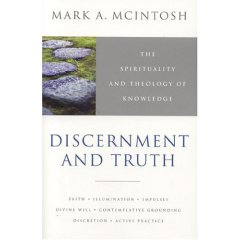
Discernment and Truth

Discernment as a spiritual practice has a long tradition in Christianity. Discernment are done either individually or communally.

In this book, theologian Mark McIntosh traced the history of spiritual discernment and discovered that there are 5 basic movements:


(1) Discernment as faith, spiritual discernment as grounded in a loving and trusting relationship with God.
(2) Discernment as distinguishing between good and evil impulses that moves people
(3) Discernment as discretion, practical wisdom, moderation, and generally good sense about what to do in given practical situations
(4) Discernment as sensitivity to and desire to pursue God's will in all things
(5) Discernment as illumination, contemplative wisdom, a noetic relationship with God that irradiates and faciliates knowledge of every kind of truth (p.5)

Discernment and Truth

Discernment as a spiritual practice has a long tradition in Christianity. Discernment are done either individually or communally.

In this book, theologian Mark McIntosh traced the history of spiritual discernment and discovered that there are 5 basic movements:


(1) Discernment as faith, spiritual discernment as grounded in a loving and trusting relationship with God.
(2) Discernment as distinguishing between good and evil impulses that moves people
(3) Discernment as discretion, practical wisdom, moderation, and generally good sense about what to do in given practical situations
(4) Discernment as sensitivity to and desire to pursue God's will in all things
(5) Discernment as illumination, contemplative wisdom, a noetic relationship with God that irradiates and faciliates knowledge of every kind of truth (p.5)

Friday, October 27, 2006

A Call to an Ancient Evangelical Future


The Call challenges Evangelical Christians to restore the priority of the divinely inspired biblical story of God’s acts in time and history.


The Call

(1) on the primacy of the Biblical narrative
(2) on the Church, the continuation of God’s narrative
(3) on the Church’s theological reflection on God’s narrative
(4) on Church’s worship as telling and enacting God’s narrative
(5) on spiritual formation in the Church as embodiment of God’s narrative
(6) on the Church’s embodied life in the world

complete text on A Call to an Ancient Evangelical Future

interview with Dr. Robert Webber and Dr. Phil Kanyon

A Call to an Ancient Evangelical Future


The Call challenges Evangelical Christians to restore the priority of the divinely inspired biblical story of God’s acts in time and history.


The Call

(1) on the primacy of the Biblical narrative
(2) on the Church, the continuation of God’s narrative
(3) on the Church’s theological reflection on God’s narrative
(4) on Church’s worship as telling and enacting God’s narrative
(5) on spiritual formation in the Church as embodiment of God’s narrative
(6) on the Church’s embodied life in the world

complete text on A Call to an Ancient Evangelical Future

interview with Dr. Robert Webber and Dr. Phil Kanyon

Thursday, October 26, 2006

A Dream...and a Hope

Posted by Picasa


I have A Dream. . . and a Hope

I dream of a day when spiritual formation has so saturated all who follow hard after Jesus that they become known to all as experts in how to live well.

• How to love a spouse well.
• How to raise children well.
• How to study well.
• How to face adversity well.
• How to run businesses and financial institutions well.
• How to form community life well.
• How to reach out to those on the margins well.
• How to die well.

read more

A Dream...and a Hope

Posted by Picasa


I have A Dream. . . and a Hope

I dream of a day when spiritual formation has so saturated all who follow hard after Jesus that they become known to all as experts in how to live well.

• How to love a spouse well.
• How to raise children well.
• How to study well.
• How to face adversity well.
• How to run businesses and financial institutions well.
• How to form community life well.
• How to reach out to those on the margins well.
• How to die well.

read more

Tuesday, October 24, 2006

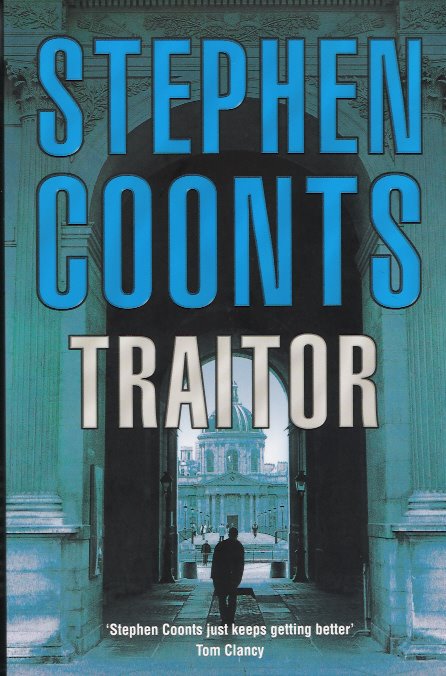
Stephen Coonts' Traitor


Book review
Coonts, Stephen 2006, Traitor, (London: Orion Books)


Tangle within tangle, plot and counter-plot, rue and treachery, cross and double-cross, true agent, false agent, double agent, gold and steel, the bomb, the dagger and the firing party, were interwoven in many a texture so intricate and yet true. The Chief and High Officers of the Secret Service reveled in these subterranean labyrinths, and pursued their task with cold and silent passion.


This quotation by Sir Winston S. Churchill aptly described Stephen Coonts’ latest spy thriller, Traitor.

The plot is about an Al-Queda attempt to blow up the government leaders attending a G-8 summit in Paris. Jake Grafton has moved up from being a top gun pilot in Flight of the Intruder. He is now a retired admiral and on the payroll of the CIA.

Jake is the new CIA head of European Ops. The CIA suspected the Direction Generale de la Securite Exterieure (DGSE) i.e. French Intelligence has a mole in the top Al-Qaeda leadership and they wanted to have access to this person. So Grafton was sent to Paris and he took along Tommy Carmellini, a CIA ‘fix it’ man along. Carmellini was involved with Grafton in previous Coonts novels when he was an admiral in the navy.

There are enough twist in the plots and subplots to keep the reader’s head spinning. After a couple of break-ins, bugging and surveillances and a trail of bodies, it was revealed that the spy handler had became the ‘handlee’; there was a reversal of roles. Of course, the plot failed.

The novel was packed with action and fast moving enough to keep the reader interested. However Coonts’ characters were rather 2 dimensional. It would be interesting to have more depth to the character of the Al-Qaeda double agent and his DGSE handler. The Islamist terrorists came across as rather stereotyped. It will nice to be allowed to have a glimpse into the mind of these Jihadists. Why do they do what they do? Why the disregard for innocent lives? Why is their faith so strong that they are willing to strap explosives to their bodies and blow themselves up? How do they develop such a faith?

No spy thriller will be complete without its array of technological gadgets. Here, there are the usual audio and video surveillance bugs, computers code breakers and Interlink. Interlink –S is a US government internet network that contains classified information and Interlink-C is the internet network where the US, Britain, Australia and Canada shared intelligence. The best gadget in my opinion is a wireless Taser. This gadget is like a pistol. Instead of shooting a bullet, it shoots a laser beam to mark the target and then a few thousand watts of electricity ride along the beam of light to fried the target!

As usual, Stephen Coonts delivers a good spy thriller and a pleasant way to spend an afternoon.

Stephen Coonts' Traitor


Book review
Coonts, Stephen 2006, Traitor, (London: Orion Books)


Tangle within tangle, plot and counter-plot, rue and treachery, cross and double-cross, true agent, false agent, double agent, gold and steel, the bomb, the dagger and the firing party, were interwoven in many a texture so intricate and yet true. The Chief and High Officers of the Secret Service reveled in these subterranean labyrinths, and pursued their task with cold and silent passion.


This quotation by Sir Winston S. Churchill aptly described Stephen Coonts’ latest spy thriller, Traitor.

The plot is about an Al-Queda attempt to blow up the government leaders attending a G-8 summit in Paris. Jake Grafton has moved up from being a top gun pilot in Flight of the Intruder. He is now a retired admiral and on the payroll of the CIA.

Jake is the new CIA head of European Ops. The CIA suspected the Direction Generale de la Securite Exterieure (DGSE) i.e. French Intelligence has a mole in the top Al-Qaeda leadership and they wanted to have access to this person. So Grafton was sent to Paris and he took along Tommy Carmellini, a CIA ‘fix it’ man along. Carmellini was involved with Grafton in previous Coonts novels when he was an admiral in the navy.

There are enough twist in the plots and subplots to keep the reader’s head spinning. After a couple of break-ins, bugging and surveillances and a trail of bodies, it was revealed that the spy handler had became the ‘handlee’; there was a reversal of roles. Of course, the plot failed.

The novel was packed with action and fast moving enough to keep the reader interested. However Coonts’ characters were rather 2 dimensional. It would be interesting to have more depth to the character of the Al-Qaeda double agent and his DGSE handler. The Islamist terrorists came across as rather stereotyped. It will nice to be allowed to have a glimpse into the mind of these Jihadists. Why do they do what they do? Why the disregard for innocent lives? Why is their faith so strong that they are willing to strap explosives to their bodies and blow themselves up? How do they develop such a faith?

No spy thriller will be complete without its array of technological gadgets. Here, there are the usual audio and video surveillance bugs, computers code breakers and Interlink. Interlink –S is a US government internet network that contains classified information and Interlink-C is the internet network where the US, Britain, Australia and Canada shared intelligence. The best gadget in my opinion is a wireless Taser. This gadget is like a pistol. Instead of shooting a bullet, it shoots a laser beam to mark the target and then a few thousand watts of electricity ride along the beam of light to fried the target!

As usual, Stephen Coonts delivers a good spy thriller and a pleasant way to spend an afternoon.

Sunday, October 22, 2006

What's Wrong with the Sermon?

Michael Spencer a.k.a Internet Monk, has this to say about the sermon

The Gospel leads us to practical discipleship, but it doesn’t create a religion of simplistic success principles. Good preaching leads to practical application without obscuring the Gospel itself.
To gain some idea of the state of contemporary preaching, survey what is being preached at any ten successful megachurches in your state, or any ten churches who very much want to become megachurches in the future. Compare these sermons to the sermons of any group of “great preachers” of the past, or well-known expositional, exegetical preachers today.

read more

What's Wrong with the Sermon?

Michael Spencer a.k.a Internet Monk, has this to say about the sermon

The Gospel leads us to practical discipleship, but it doesn’t create a religion of simplistic success principles. Good preaching leads to practical application without obscuring the Gospel itself.
To gain some idea of the state of contemporary preaching, survey what is being preached at any ten successful megachurches in your state, or any ten churches who very much want to become megachurches in the future. Compare these sermons to the sermons of any group of “great preachers” of the past, or well-known expositional, exegetical preachers today.

read more

Saturday, October 21, 2006

The Ladder of Graces

The Ladder of Graces
by Theopkanis the Monk from Philokalia

The first step is that of purist prayer.
From this there comes a warmth of heart,
And then a strange, a holy energy
Then tears wrung from the heart, God-given,
Then peace from thoughts of every kind,
From this arises purging of the intellect,
And next the vision of heavenly mysteries.
Unheard-of light is born from this ineffably,
And, thence, beyond all telling, the heart’s illumination.
Last comes- a step that has no limit,
Though compassed in a single line-
Perfection that is endless.

The ladder’s lowest step
Prescribes pure prayer alone.
But prayer has many forms:
My discourse would be long
Were I now to speak of them:
And, friend, know that always
Experience teaches one, not words.

A ladder rising wonderously to heaven’s vault,
Ten steps that strangely vivify the soul
Ten steps that herald the soul’s life,
A saint inspired by God has said:
Do not deceive yourself with idle hopes
That in the world to come you will find life.
If you have not tried to find it in this present world.
Ten steps: a wisdom born of God,
Ten steps: fruit of all the books,
Ten steps that point toward perfection,
Ten steps that lead one up to heaven
Ten steps through which a man knows God.

The ladder may seems short indeed,
But if your heart can inwardly experience it,
You will find a wealth the world cannot contain,
A god-like fountain flowing with unheard-of life.
This tear-graced ladder is the best of masters,
Clearly teaching each to know its stages
If when you behold it
You think you stand securely on it,

Ask yourself which step you stand,
So that we, the indolent, may also profit.
My friend, if you want to learn from all this,
Detach yourself from everything,
From what is senseless, from what seems intelligent
Without detachment, nothing can be learnt.
Experience alone can teach these things, not talk.