When I was interviewed for the position of pastor of First Baptist Church, I had to answer one key question: "Do you speak in tongues?"The church had been split by the charismatic controversy. They had to know.My answer then and my answer now is this:"What you need to know is my theology on the matter. That is more critical then whether I have this gift."
I have not revisited this topic for some time. In the twenty odd years since that interview many of the churches I know have moved beyond that controversy and that divide. There has been a lot of maturing all round. Although different churches still have different views on the subject there isa much higher level of mutual respect and a lot of healthy learning between different traditions. (I am grateful for the many friends I have from Pentecostal and charismatic traditions. I am grateful for their
friendship and the opportunities we have for working together.)But once in a while you get "deja vu all over again" and you get a speaker or a group that pushes the classical Pentecostal position on tongues, tongues here understood as an unknown language, sounds uttered in prayer unintelligible to the one praying and to others (1 Corinthians 14:2).Usually the agenda is the desire to
see the release of God's supernatural power. This is something seen as happening in a believer's life separate from conversion, an event often referred to as the baptism of the Spirit. As evidence that this release had taken place, one was given the gift of tongues. Tongues became something very critical because it was identified with spiritual empowerment which is the real goal. So what is my take on this?First off I am very grateful to my Pentecostal and charismatic friends for reminding us of the need for the Holy Spirit's power. Luke summarizes Jesus's ministry in this way: "...with respect to Jesus from Nazareth, that God anointed him with the Holy Spirit and with power. He went around doing good and healing all who were oppressed by thedevil, because God was with him." (Acts
10:38 NET)The link between supernatural power, the Holy Spirit andthe ability to do God's work is clear. And Jesus is the model for His church.Too often the modern church has put her trust in techniques, technology and good marketing to get God's job done, basically paying lip service to the need for the Spirit's
anointing. We welcome every reminder that while we should appreciate all tools the Lord gives us, our ultimate trust is in Him and in His empowerment.But what is the linkage between spiritual anointing and thegift of tongues? Is tongues something that everyone should be seeking as the sign of God's empowerment? My starting point is 1 Corinthians 12: 29-30"Not all are apostles, are they? Not
all are prophets, are they? Not all are teachers, are they? Not all perform miracles, do they? Not all have gifts of healing, do they? Not all speak in tongues, do they? Not all interpret, do they?" (NET)There is no ambiguity in the Greek. Paul is asking a rhetorical question that demands the answer "no". No, tongues is not for everyone.Remember that Paul is writing to a church that included a faction that was pushing for more dramatic manifestations of the Spirit including the gift of tongues. This was a group who probably saw themselves as spiritual elites who wanted others to join them and apparently one of the marks that you had reached their level of anointing was the exercise of the gift oftongues.Paul is clear. No, not everyone has this gift. Indeed it isthe Lord who decides who gets what gift. (1 Corinthians 12:11). But Paul is
not against the gift of tongues. He admits to exercising the gift frequently in his private prayers. But he is also clear that his preference is that intelligible language be used when the church gathers so that believers can be edified."I thank God that I speak in tongues more than all of you, but in the church I want to speak five words with my mind to instruct others, rather than
ten thousand words in a tongue." (1 Corinthians 14:18-19 NET).There are those who argue that there is a "sign of tongues"which is to be differentiated from the "gift of tongues." At Pentecost one of the signs that the Spirit had come was tongues. And everyone ought to seek this "sign of tongues" as evidence for
the Spirit's anointing though not all will be given the "gift of tongues."I do not see this differentiation in Scripture. The word "tongues" is the same both in Acts 2 and in 1 Corinthians. And if one were to push for the signs at Pentecost should we not also push for the sound of a violent wind and the tongues of fire?Therefore I am not convinced that the gift of tongues is the
indispensable sign of God's empowerment or that all Christians should strive to get it. And I am against any sort of elitism in the church. There are no second class Christians at the Lord's table.But I am convinced that we desperately need the empowermentof the Spirit for the life and mission of the church.How then do we appropriate God's power for His purposes? For my answer I go to Acts 4: 23-31.Here we find a church totally sold out to God and His purposes. Initial success in mission work had provoked persecution. God's power was critically needed for a breakthrough. And so the group joined in corporate prayer
beseeching the Lord to intervene and work His power with the following results:"When they had prayed, the place where they were assembled together was shaken, and they were all filled with the HolySpirit and began to speak the word of God courageously." (4:31 NET) Yes there was accompanying physical phenomenon - the place was shaken - and the Lord does that sometimes, but the key words are "prayed," "filled with the Holy Spirit," and "began to speak the word of Godcourageously."When we focus on the phenomena of tongues we often get tiedup into all sorts of controversy that take us away from theheart of the issue.Instead of pushing tongues we should be searching our hearts and asking, are we are indeed sold out to God and His purposes? Are we really aware of our total helplessness to do His work apart from His anointing?Whatever our stand on the gift of the tongues, and every church needs to define their position, we must major on the majors.Come O Lord and fill us again.
Wednesday, December 13, 2006
Biting my Tongue


Biting my Tongue
When I was interviewed for the position of pastor of First Baptist Church, I had to answer one key question: "Do you speak in tongues?"The church had been split by the charismatic controversy. They had to know.My answer then and my answer now is this:"What you need to know is my theology on the matter. That is more critical then whether I have this gift."
I have not revisited this topic for some time. In the twenty odd years since that interview many of the churches I know have moved beyond that controversy and that divide. There has been a lot of maturing all round. Although different churches still have different views on the subject there isa much higher level of mutual respect and a lot of healthy learning between different traditions. (I am grateful for the many friends I have from Pentecostal and charismatic traditions. I am grateful for their
friendship and the opportunities we have for working together.)But once in a while you get "deja vu all over again" and you get a speaker or a group that pushes the classical Pentecostal position on tongues, tongues here understood as an unknown language, sounds uttered in prayer unintelligible to the one praying and to others (1 Corinthians 14:2).Usually the agenda is the desire to
see the release of God's supernatural power. This is something seen as happening in a believer's life separate from conversion, an event often referred to as the baptism of the Spirit. As evidence that this release had taken place, one was given the gift of tongues. Tongues became something very critical because it was identified with spiritual empowerment which is the real goal. So what is my take on this?First off I am very grateful to my Pentecostal and charismatic friends for reminding us of the need for the Holy Spirit's power. Luke summarizes Jesus's ministry in this way: "...with respect to Jesus from Nazareth, that God anointed him with the Holy Spirit and with power. He went around doing good and healing all who were oppressed by thedevil, because God was with him." (Acts
10:38 NET)The link between supernatural power, the Holy Spirit andthe ability to do God's work is clear. And Jesus is the model for His church.Too often the modern church has put her trust in techniques, technology and good marketing to get God's job done, basically paying lip service to the need for the Spirit's
anointing. We welcome every reminder that while we should appreciate all tools the Lord gives us, our ultimate trust is in Him and in His empowerment.But what is the linkage between spiritual anointing and thegift of tongues? Is tongues something that everyone should be seeking as the sign of God's empowerment? My starting point is 1 Corinthians 12: 29-30"Not all are apostles, are they? Not
all are prophets, are they? Not all are teachers, are they? Not all perform miracles, do they? Not all have gifts of healing, do they? Not all speak in tongues, do they? Not all interpret, do they?" (NET)There is no ambiguity in the Greek. Paul is asking a rhetorical question that demands the answer "no". No, tongues is not for everyone.Remember that Paul is writing to a church that included a faction that was pushing for more dramatic manifestations of the Spirit including the gift of tongues. This was a group who probably saw themselves as spiritual elites who wanted others to join them and apparently one of the marks that you had reached their level of anointing was the exercise of the gift oftongues.Paul is clear. No, not everyone has this gift. Indeed it isthe Lord who decides who gets what gift. (1 Corinthians 12:11). But Paul is
not against the gift of tongues. He admits to exercising the gift frequently in his private prayers. But he is also clear that his preference is that intelligible language be used when the church gathers so that believers can be edified."I thank God that I speak in tongues more than all of you, but in the church I want to speak five words with my mind to instruct others, rather than
ten thousand words in a tongue." (1 Corinthians 14:18-19 NET).There are those who argue that there is a "sign of tongues"which is to be differentiated from the "gift of tongues." At Pentecost one of the signs that the Spirit had come was tongues. And everyone ought to seek this "sign of tongues" as evidence for
the Spirit's anointing though not all will be given the "gift of tongues."I do not see this differentiation in Scripture. The word "tongues" is the same both in Acts 2 and in 1 Corinthians. And if one were to push for the signs at Pentecost should we not also push for the sound of a violent wind and the tongues of fire?Therefore I am not convinced that the gift of tongues is the
indispensable sign of God's empowerment or that all Christians should strive to get it. And I am against any sort of elitism in the church. There are no second class Christians at the Lord's table.But I am convinced that we desperately need the empowermentof the Spirit for the life and mission of the church.How then do we appropriate God's power for His purposes? For my answer I go to Acts 4: 23-31.Here we find a church totally sold out to God and His purposes. Initial success in mission work had provoked persecution. God's power was critically needed for a breakthrough. And so the group joined in corporate prayer
beseeching the Lord to intervene and work His power with the following results:"When they had prayed, the place where they were assembled together was shaken, and they were all filled with the HolySpirit and began to speak the word of God courageously." (4:31 NET) Yes there was accompanying physical phenomenon - the place was shaken - and the Lord does that sometimes, but the key words are "prayed," "filled with the Holy Spirit," and "began to speak the word of Godcourageously."When we focus on the phenomena of tongues we often get tiedup into all sorts of controversy that take us away from theheart of the issue.Instead of pushing tongues we should be searching our hearts and asking, are we are indeed sold out to God and His purposes? Are we really aware of our total helplessness to do His work apart from His anointing?Whatever our stand on the gift of the tongues, and every church needs to define their position, we must major on the majors.Come O Lord and fill us again.
Tuesday, December 12, 2006
Bows and Arrows

Once Abbot Antony was conversing with some breathen, and a hunter who was after game in the wilderness came upon them. He saw Abbot Antony and the brothers enjoying themselves, and disapproved. Abbot Antony said, "Put an arrow in your bow and shoot it."
This he did.
"Now shoot another," said the Elder. "And another, and another."
Then the hunter said, "If I bend my bow all the time it will break."
Abbot Anthony replied, "So it is also in the work of God. If we push ourselves beyond measure, the breathen will soon collapse. It is right therefore, from time to time, to relax."
Soli Deo Gloria
Bows and Arrows
Once Abbot Antony was conversing with some breathen, and a hunter who was after game in the wilderness came upon them. He saw Abbot Antony and the brothers enjoying themselves, and disapproved. Abbot Antony said, "Put an arrow in your bow and shoot it."
This he did.
"Now shoot another," said the Elder. "And another, and another."
Then the hunter said, "If I bend my bow all the time it will break."
Abbot Anthony replied, "So it is also in the work of God. If we push ourselves beyond measure, the breathen will soon collapse. It is right therefore, from time to time, to relax."
Soli Deo Gloria
Monday, December 11, 2006
Maturing the Spiritual Formation Movement
 Richard Foster has been at the forefront of this so-called modern spiritual formation movement for many years so he is the right person to comment on it.
He wrote in his Renovare November newsletter that
"The task of maturing the modern spiritual formation movement is complicated and will challenge our finest thinking and most creative energies.
There are two reasons, at least, for the complication. To begin with, the continuing popularity of spiritual formation today has meant that all kinds of writing and speaking has now gone forth on the subject. Frankly—and I hate to say it in such a blunt matter—much that has gone out under the name of spiritual formation has been done by people who simply have not thought substantively on the subject, and (dare I mention it) we have to wonder if they themselves have been spiritually formed to any substantial degree. Hence, a great deal of "Holy Baloney" is out there now, and the average person is quickly going to despair at attempting to distinguish the good from the bad.
Then, secondly, people in general and Americans in particular are a fickle lot, and th
 ey tire quickly. Many, in fact, are already going on to the next fad. And let's be honest: how many of us can truly wrap our minds around the notion of a forty-year journey into the subterranean chambers of the soul? That was Moses's experience of character formation in the Egyptian desert, you recall. Forty years! Are we not tempted to opt instead for a short-cut or two? Impatience is a primary spiritual problem in our day."
His recommendations?
1. We take the long view . . . always.
2. We refuse to think of spiritual formation in terms of various practices . . . ever.
3. We engage in spiritual formation for the sake of the Church universal . . . always.
4. We do not center on curriculum based solutions . . . ever.
5. We draw wisdom and insight from the ancient sources . . . always.
6. We do not aim at outward action . . . ever.
7. We are keenly aware that true inward transformation will incline our hearts toward suffering humanity . . . always.
A good reminder that spiritual formation takes time, involve wisdom and character formation, is not program-driven and is missional.
read more
Maturing the Spiritual Formation Movement
Richard Foster has been at the forefront of this so-called modern spiritual formation movement for many years so he is the right person to comment on it.He wrote in his Renovare November newsletter that
"The task of maturing the modern spiritual formation movement is complicated and will challenge our finest thinking and most creative energies.
There are two reasons, at least, for the complication. To begin with, the continuing popularity of spiritual formation today has meant that all kinds of writing and speaking has now gone forth on the subject. Frankly—and I hate to say it in such a blunt matter—much that has gone out under the name of spiritual formation has been done by people who simply have not thought substantively on the subject, and (dare I mention it) we have to wonder if they themselves have been spiritually formed to any substantial degree. Hence, a great deal of "Holy Baloney" is out there now, and the average person is quickly going to despair at attempting to distinguish the good from the bad.
Then, secondly, people in general and Americans in particular are a fickle lot, and th
ey tire quickly. Many, in fact, are already going on to the next fad. And let's be honest: how many of us can truly wrap our minds around the notion of a forty-year journey into the subterranean chambers of the soul? That was Moses's experience of character formation in the Egyptian desert, you recall. Forty years! Are we not tempted to opt instead for a short-cut or two? Impatience is a primary spiritual problem in our day."His recommendations?
1. We take the long view . . . always.
2. We refuse to think of spiritual formation in terms of various practices . . . ever.
3. We engage in spiritual formation for the sake of the Church universal . . . always.
4. We do not center on curriculum based solutions . . . ever.
5. We draw wisdom and insight from the ancient sources . . . always.
6. We do not aim at outward action . . . ever.
7. We are keenly aware that true inward transformation will incline our hearts toward suffering humanity . . . always.
A good reminder that spiritual formation takes time, involve wisdom and character formation, is not program-driven and is missional.
read more
Sunday, December 10, 2006
Claiming God's Promises
 Text: 2 Peter 1:3-4
His divine power has given us everything we need for life and godliness through our knowledge of him who called us by his own glory and goodness. Through these he has given us his very great and precious promises, so that through them you may participate in the divine nature and escape the corruption in the world caused by evil desires. (NIV)
God’s divine power enables us to know Him. Knowledge of God means knowledge of His promises given to us. By claiming these promises, we are led into the path of Godliness and better able to withstand the temptations of the world and of our own sinful nature.
read more
Claiming God's Promises
Text: 2 Peter 1:3-4His divine power has given us everything we need for life and godliness through our knowledge of him who called us by his own glory and goodness. Through these he has given us his very great and precious promises, so that through them you may participate in the divine nature and escape the corruption in the world caused by evil desires. (NIV)
God’s divine power enables us to know Him. Knowledge of God means knowledge of His promises given to us. By claiming these promises, we are led into the path of Godliness and better able to withstand the temptations of the world and of our own sinful nature.
read more
Thursday, December 7, 2006
A Meditation on Rembrandt's Jeremiah

In 1630, Rembrandt painted Jeremiah Lamenting the Destruction of Jerusalem. I was enthralled when I viewed the painting on display in the Rijksmuseum, Amsterdam recently.
2006 marked the 400 anniversary of Rembrandt’s birth. This oil on panel painting is one of the finest works of Rembrandt's Leiden period. For many years it was incorrectly identified but it certainly shows Jeremiah; who had prophesied the destruction of Jerusalem by King Nebuchadnezzar of Babylon (Jeremiah, chapters 32, 33), lamenting over the destruction of the city. In the distance on the left a man at the top of the steps holds clenched fists to his eyes: this was the last king of Judah, Zedekiah, who was blinded by Nebuchadnezzar. The prominent burning domed building in the background is probably Solomon's Temple.
Jeremiah's pose, his head supported by his hand, is a traditional attitude of melancholy: his elbow rests on a large book which is inscribed 'Bibel' on the edge of the pages, probably a much later addition to the painting. The book is presumably meant to be his own Book of Jeremiah or the Book of Lamentations. Rembrandt is a master of light in art. The lighting of the figure is particularly effective with the foreground and the right side of the prophet's face in shadow and his robe outlined against the rock. Jeremiah’s hands rested on a few pieces of gold and silver vessels which he must have managed to salvage from the burning temple.
The painting has a powerful effect on me. As I gaze on Jeremiah’s face and hands, I felt the pain and disappointment of a man who served God but met with much opposition and ridicule. No one listened to him. Everyone did what seemed right in their own eyes. Jeremiah had talked and scolded and cajoled but it all fell on deaf ears. And because of this, he had to watch as his beloved country was sacked, Jerusalem burnt and the temple destroyed. He had failed as a prophet of the Lord to convince his people. Though the fault was not his, the guilt must have weighted heavily on his mind. The guilt and the pain of a prophet as revealed in this painting.
The painting also spoke to me of the many parents who had to watch their children go astray. They have tried their best to teach them right from wrong. However, that is no guarantee that the children will follow and make correct informed decisions. I am sure the pain in the hearts of these parents resonates with the lamentation in Jeremiah’s heart. The guilt and pain of these parents as reflected in this painting.
The painting also revealed to me the heart of God. How the heart of God must have been broken by the people He loved. He loved so much that He was willing to send His only Son to die for them. These people were so fickle minded and ungrateful. He had given opportunity after opportunity to return to Him yet they continued to spurn Him. They have chosen to chase after other gods who promised immediate gratification. The same pain and sorrow in His heart as reflected by Jeremiah and the newly blinded Zedekiah. The pain of the broken heart of God as ingrained in this painting.
Often, we take for granted, God’s love for us. Looking at Rembrandt’s painting is a graphic reminder of the danger of taking His love and God, Himself for granted.
Soli Deo Gloria
A Meditation on Rembrandt's Jeremiah
In 1630, Rembrandt painted Jeremiah Lamenting the Destruction of Jerusalem. I was enthralled when I viewed the painting on display in the Rijksmuseum, Amsterdam recently.
2006 marked the 400 anniversary of Rembrandt’s birth. This oil on panel painting is one of the finest works of Rembrandt's Leiden period. For many years it was incorrectly identified but it certainly shows Jeremiah; who had prophesied the destruction of Jerusalem by King Nebuchadnezzar of Babylon (Jeremiah, chapters 32, 33), lamenting over the destruction of the city. In the distance on the left a man at the top of the steps holds clenched fists to his eyes: this was the last king of Judah, Zedekiah, who was blinded by Nebuchadnezzar. The prominent burning domed building in the background is probably Solomon's Temple.
Jeremiah's pose, his head supported by his hand, is a traditional attitude of melancholy: his elbow rests on a large book which is inscribed 'Bibel' on the edge of the pages, probably a much later addition to the painting. The book is presumably meant to be his own Book of Jeremiah or the Book of Lamentations. Rembrandt is a master of light in art. The lighting of the figure is particularly effective with the foreground and the right side of the prophet's face in shadow and his robe outlined against the rock. Jeremiah’s hands rested on a few pieces of gold and silver vessels which he must have managed to salvage from the burning temple.
The painting has a powerful effect on me. As I gaze on Jeremiah’s face and hands, I felt the pain and disappointment of a man who served God but met with much opposition and ridicule. No one listened to him. Everyone did what seemed right in their own eyes. Jeremiah had talked and scolded and cajoled but it all fell on deaf ears. And because of this, he had to watch as his beloved country was sacked, Jerusalem burnt and the temple destroyed. He had failed as a prophet of the Lord to convince his people. Though the fault was not his, the guilt must have weighted heavily on his mind. The guilt and the pain of a prophet as revealed in this painting.
The painting also spoke to me of the many parents who had to watch their children go astray. They have tried their best to teach them right from wrong. However, that is no guarantee that the children will follow and make correct informed decisions. I am sure the pain in the hearts of these parents resonates with the lamentation in Jeremiah’s heart. The guilt and pain of these parents as reflected in this painting.
The painting also revealed to me the heart of God. How the heart of God must have been broken by the people He loved. He loved so much that He was willing to send His only Son to die for them. These people were so fickle minded and ungrateful. He had given opportunity after opportunity to return to Him yet they continued to spurn Him. They have chosen to chase after other gods who promised immediate gratification. The same pain and sorrow in His heart as reflected by Jeremiah and the newly blinded Zedekiah. The pain of the broken heart of God as ingrained in this painting.
Often, we take for granted, God’s love for us. Looking at Rembrandt’s painting is a graphic reminder of the danger of taking His love and God, Himself for granted.
Soli Deo Gloria
Saturday, December 2, 2006
San Giovanni in Laterano, Rome, Part 1

S. Matteo l'Evangelista
(St. Matthew)
by Camillo Rusconi (1658-1728)
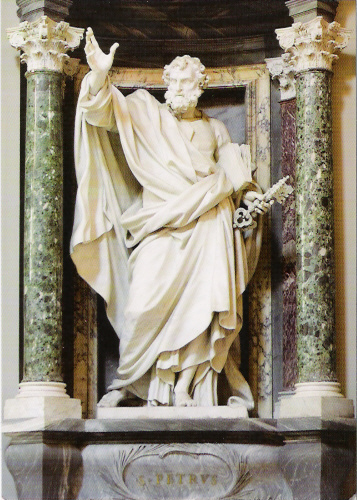
S.Pietro, I papa
(St. Peter)
by Pierre Monnot (1658-1733)
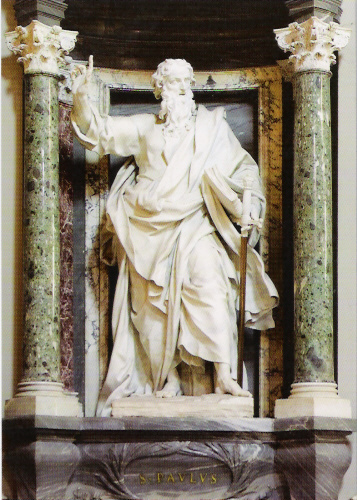
S. Paolo (St. Paul)
by Pierre Monnot (1658-1733)

S. Giovanni l' Evangelista
(St. John)
by Camillo Rusconi (1658-1728)

S. Guido, detto il Taddeo
(St. Judas, son of James)
by Lorenzo Ottoni (1658-1736)

S. Simone, detto il Cananeo
(Simon the Zealot)
by Francesco Maratti
San Giovanni in Laterano, Rome, Part 1
S. Matteo l'Evangelista
(St. Matthew)
by Camillo Rusconi (1658-1728)
S.Pietro, I papa
(St. Peter)
by Pierre Monnot (1658-1733)
S. Paolo (St. Paul)
by Pierre Monnot (1658-1733)
S. Giovanni l' Evangelista
(St. John)
by Camillo Rusconi (1658-1728)
S. Guido, detto il Taddeo
(St. Judas, son of James)
by Lorenzo Ottoni (1658-1736)
S. Simone, detto il Cananeo
(Simon the Zealot)
by Francesco Maratti
San Giovanni in Laterano, Rome, Part 2
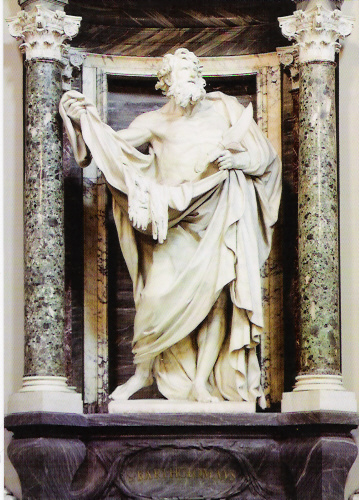 S. Bartolomo
(St. Bartholomew)
by Pierr Legros (1666-1719)

S. Filippo
(St. Philip)
by Giuseppe Mazzuoli
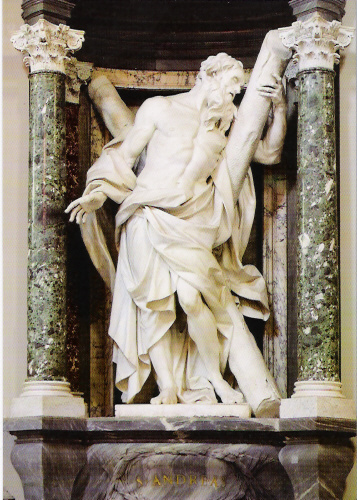
San' Andrea
(St. Andrew)
by Camillo Rusconi (1658-1728)

S. Tommaso
(St. Thomas)
by Pierre Legros (1666-1719)

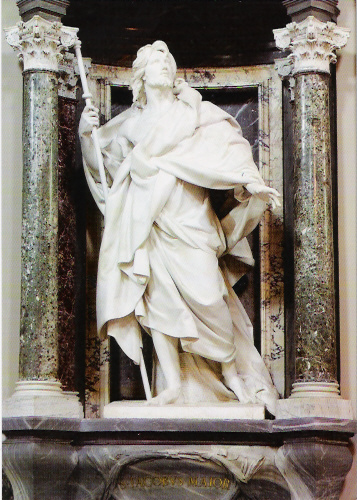
S. Giacomo di Zebedeo, detto il Maggiore
(St. James)
by Camillo Rusconi (1658-1728)
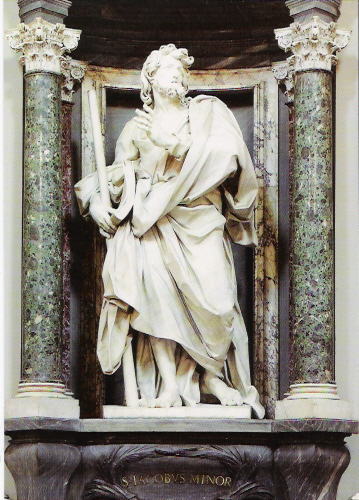
S. Giacomo d'Alfeo, detto il Minore
(St. James , son of Alphaeus)
by Angelo De Rossi
San Giovanni in Laterano, Rome, Part 2
S. Bartolomo(St. Bartholomew)
by Pierr Legros (1666-1719)
S. Filippo
(St. Philip)
by Giuseppe Mazzuoli
San' Andrea
(St. Andrew)
by Camillo Rusconi (1658-1728)
S. Tommaso
(St. Thomas)
by Pierre Legros (1666-1719)
S. Giacomo di Zebedeo, detto il Maggiore
(St. James)
by Camillo Rusconi (1658-1728)
S. Giacomo d'Alfeo, detto il Minore
(St. James , son of Alphaeus)
by Angelo De Rossi
Thomas Merton on Obsession on Doing
Thomas Merton